Author

admin

Browsing

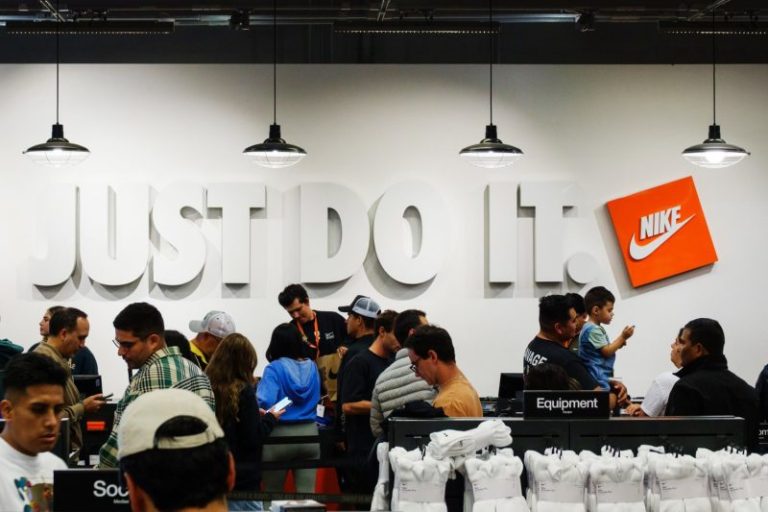
The U.S. Equal Employment Opportunity Commission said Wednesday that it is investigating Nike for allegedly discriminating against white workers.

The agency that polices discrimination in the workplace filed an action in federal court in Missouri to compel the publicly traded athletic shoe and apparel giant to produce information in response to a subpoena the agency served on the company last fall, according to court filings reviewed by NBC News.

The EEOC said it was investigating allegations that the company’s mentorship and training programs and its personnel decisions gave nonwhite employees preferential treatment that amounts, according to the agency, to discrimination against white workers.

Nike is the world’s largest sportswear and apparel company, with nearly 80,000 employees and revenues of around $51.4 billion in 2024.

The allegations were not made by workers at Nike who believed they had been the targets of unfair treatment, however, as is typically the case in EEOC investigations.

Instead, the court filings show that this case stems from a commissioner’s charge brought by then-commissioner Andrea Lucas herself in May 2024, and based on publicly available information such as Nike’s own annual “Impact Reports” and information on its public website.

The EEOC’s request that a judge enforce the subpoena is the latest instance of the Trump administration using a federal agency that is typically charged with preventing and responding to discrimination against nonwhite Americans, and deploying it instead to protect what it says are the underrepresented interests of white people.

Nike has objected in court to many of the EEOC’s demands to documents over the last several months, arguing that they are vague, overly broad, and seek information dating back to well before the period in question.

“This feels like a surprising and unusual escalation,” a Nike spokesperson said. “We have had extensive, good-faith participation in an EEOC inquiry into our personnel practices, programs, and decisions and have had ongoing efforts to provide information and engage constructively with the agency.”

The spokesperson added that Nike has shared “thousands of pages of information and detailed written responses” in connection with the agency’s inquiry and said the company is in the “process of providing additional information.” Nike will respond to the agency’s petition, the spokesperson said.

Lucas was appointed chair of the EEOC by President Donald Trump in November 2025 after serving as a commissioner since 2020, when the president nominated Lucas to the agency.

The agency said it filed the subpoena enforcement action after “first attempting to obtain voluntary compliance with its investigative requests.”

This post appeared first on NBC NEWS

Mr. Thordarson brings two decades of expertise in operations, infrastructure development, and large-scale business transformation in the aviation industry

Syntholene Energy Corp. (TSXV: ESAF,OTC:SYNTF) (OTCQB: SYNTF) (FSE: 3DD0) (‘Syntholene’ or the ‘Company’) announces the nomination of Jens Thordarson, former Chief Operating Officer of Icelandair, to its Advisory Board. With nearly two decades of leadership experience in the aviation industry, Mr. Thordarson brings expertise in operations, infrastructure development, and large-scale business transformation, critical elements as Syntholene advances its synthetic fuel solutions for global transportation and logistics.

Mr. Thordarson held multiple executive roles at Icelandair over his 17-year tenure, including Chief Operating Officer and Vice President of Technical Operations. In these roles, he spearheaded large-scale operational improvements, optimized fleet management, and integrated advanced technologies to enhance efficiency and sustainability in one of the world’s most demanding industries. Currently, he serves as CEO of GeoSalmo, a company focused on sustainable aquaculture, further reinforcing his commitment to innovative and environmentally responsible industries. Mr. Thordarson also serves as the Honorary Consul of Ireland in Iceland, encouraging tourism, trade, and foreign affairs between the two nations.

‘Jens’ leadership in aviation and operations, combined with his strategic network in the nation of Iceland, makes him an ideal contributor to Syntholene’s Advisory Board,’ said Dan Sutton, Chief Executive Officer of Syntholene Energy Corp. ‘As we work to bring sustainable synthetic fuels to Icelandic and European markets, his insights into politics, regulatory landscape, and infrastructure readiness will be instrumental in driving our commercialization strategy.’

Syntholene Energy Corp. is at the forefront of developing sustainable synthetic fuels designed to seamlessly integrate with existing energy infrastructure while significantly reducing carbon emissions. The nomination of Mr. Thordarson reinforces the Company’s commitment to drawing expertise from industries where fuel efficiency, innovation, and operational scale are paramount.

‘I am excited to join Syntholene’s Advisory Board and contribute my experience in aviation, operations, and strategic growth,’ said Mr. Thordarson. ‘The transition to sustainable fuels is essential for industries like aviation, and Syntholene’s technology represents a major step forward, taking a fundamentally different and more disciplined approach to the challenge. I look forward to working with the team as they move toward scale.’

About Syntholene

Syntholene is actively commercializing its novel Hybrid Thermal Production System for low-cost clean fuel synthesis. The target output is ultrapure synthetic jet fuel, manufactured at 70% lower cost than the nearest competing technology today. The company’s mission is to deliver the world’s first truly high-performance, low-cost, and carbon-neutral synthetic fuel at an industrial scale, unlocking the potential to produce clean synthetic fuel at lower cost than fossil fuels, for the first time.

Syntholene’s power-to-liquid strategy harnesses thermal energy to power proprietary integrations of hydrogen production and fuel synthesis. Syntholene has secured 20MW of dedicated energy to support the Company’s upcoming demonstration facility and commercial scale-up.

Founded by experienced operators across advanced energy infrastructure, nuclear technology, low-emissions steel refining, process engineering, and capital markets, Syntholene aims to be the first team to deliver a scalable modular production platform for cost-competitive synthetic fuel, thus accelerating the commercialization of carbon-neutral eFuels across global markets.

For further information, please contact:
Dan Sutton, CEO
comms@syntholene.com
www.syntholene.com

Investor Relations
KIN Communications Inc.
604-684-6730
ESAF@kincommunications.com

Forward-Looking Statements
This press release contains forward-looking statements within the meaning of applicable securities laws. The use of any of the words ‘expect’, ‘anticipate’, ‘aims’, ‘continue’, ‘estimate’, ‘objective’, ‘may’, ‘will’, ‘project’, ‘should’, ‘believe’, ‘plans’, ‘intends’ and similar expressions are intended to identify forward-looking information or statements. All statements, other than statements of historical fact, including but not limited to statements regarding the completion of the definitive agreement, successful implementation of the test facility, commercial scalability, technical and economic viability, anticipated geothermal power availability, anticipated benefit of eFuel, and future commercial opportunities, are forward-looking statements.

The forward-looking statements and information are based on certain key expectations and assumptions made by the Company, including without limitation the assumption that the Company will be able to execute its business plan, that the eFuel will have its expected benefits, that there will be market adoption, and that the Company will be able to access financing as needed to fund its business plan. Although the Company believes that the expectations and assumptions on which such forward-looking statements and information are based are reasonable, undue reliance should not be placed on the forward-looking statements and information because the Company can give no assurance that they will prove to be correct. Since forward-looking statements and information address future events and conditions, by their very nature, they involve inherent risks and uncertainties.

Actual results could differ materially from those currently anticipated due to a number of factors and risks, including, without limitation, Syntholene’s ability to meet production targets, realize projected economic benefits, overcome technical challenges, secure financing, maintain regulatory compliance, manage geopolitical risks, and successfully negotiate definitive terms. Syntholene does not undertake any obligation to update or revise these forward-looking statements, except as required by applicable securities laws.

Readers are advised to exercise caution and not to place undue reliance on these forward-looking statements.

To view the source version of this press release, please visit https://www.newsfilecorp.com/release/282796

News Provided by TMX Newsfile via QuoteMedia

This post appeared first on investingnews.com

For at least two decades, former Amazon executive Dave Clark ended his work week the same way: a standing Friday date night with his wife, Leigh Anne.

Over dinner, the Clarks would talk through the “peak and pit” of their weeks. The ritual often revolved around Amazon, where Clark played a central role in building the logistics infrastructure that helped launch the e-commerce era.

During those years, Leigh Anne was a sounding board for her husband. In the process, she had a front-row seat to Amazon’s growth from what she called “a baby to a behemoth.”

By the time Clark left Amazon in 2022, he was CEO of the Worldwide Consumer division and one of billionaire founder Jeff Bezos’ top lieutenants.

Dave Clark at Auger headquarters Monday.David Jaewon Oh for NBC News

But these days, Fridays for the Clarks look very different.

Their dinner date has morphed into afternoon cocktails — a bourbon with Diet Coke for her and a Manhattan for him. And the conversation isn’t focused on Amazon anymore. It’s about Auger, the supply-chain startup they run together.

In their first joint interview from Auger’s Seattle office, the Clarks described how their marriage and complementary skill sets are shaping the company.

“We’ve been together for so long that we kind of just read each other’s minds,” Leigh Anne said. Working together, she said, “felt like a natural fit.”

This post appeared first on NBC NEWS

Japan announced that it has successfully retrieved mineral-rich seabed sediment from nearly 6,000 meters below the ocean’s surface near the remote island of Minamitorishima.

Officials say the technical milestone could help reduce the country’s dependence on China.

The work was carried out by deep-sea drilling vessel Chikyu, which collected the sediment as part of a government-backed test program aimed at assessing the feasibility of mining rare-earths-bearing mud from the deep ocean.

According to Japan’s Agency for Marine-Earth Science and Technology, Chikyu departed last month for Minamitorishima — about 1,950 kilometers southeast of Tokyo — and arrived at the test site on January 17.

The first batch of sediment was recovered on February 1.

“It is a first step toward industrialization of domestically produced rare earth in Japan,” Prime Minister Sanae Takaichi said in a statement posted on X. “We will make efforts toward achieving resilient supply chains for rare earths and other critical minerals to avoid overdependence on a particular country.”

Rare earths are essential in the high-performance magnets used in electric vehicles, wind turbines, electronics and defense systems. China currently dominates global production and processing of heavy rare earths, giving Beijing significant influence over prices and supply, a vulnerability that has increasingly worried world governments.

Japan’s latest test comes amid heightened geopolitical tension in the region.

Tokyo has grown more concerned about potential supply disruptions after China recently suspended exports of certain dual-use goods to Japan. While rare earths were not explicitly named, the move raised fears that Beijing could use its control over critical minerals as leverage as it has in the past.

Japanese researchers first identified rare-earth-rich mud deposits around Minamitorishima in the 2010s. Since then, the government has funded research, development and feasibility studies under its Strategic Innovation Promotion Program, focusing on whether those resources could support a domestic supply chain.

The current trial is designed to test not only the ability to retrieve sediment from extreme depths, but also the logistics of deep-sea mining. Officials cautioned that the work is still at an early stage. Details such as the concentration of rare earth elements in the retrieved mud and the overall recovery rates are still being analyzed. Moving toward commercial production would require demonstrating the entire process, from seabed extraction to separation and refining.

Japan plans to continue testing through mid-February. If the trials are successful, larger-scale demonstrations could follow, potentially including the construction of a dedicated processing facility on Minamitorishima later this decade.

US targets rare earths security with Project Vault

While Japan pushes deeper into rare earths supply diversification, developments in the US underscore how deeply critical minerals policies are shaping markets on both sides of the Pacific.

On Monday (February 2), the Trump administration rolled out Project Vault, a roughly US$12 billion strategic critical minerals reserve aimed at reducing US dependence on China for rare earths and other essential metals.

The initiative, anchored by a US$10 billion loan from the US Export‑Import Bank and about US$2 billion in private capital, is designed to stockpile strategic materials like rare earths, cobalt and lithium.

The program’s backers say the reserve will function much like America’s Strategic Petroleum Reserve, offering a buffer against global supply disruptions and insulating manufacturers from price shocks that have plagued markets during recent US-China trade tensions. Analysts say the effort signals an ongoing shift toward industrial policy that treats critical minerals as strategic assets, even as completion details and long‑term execution remain uncertain.

The financial markets responded quickly. Shares of Australian rare earths producer Lynas Rare Earths (ASX:LYC,OTCQX:LYSDY) rallied more than 3 percent on Tuesday (February 3), closing at AU$15.25, reflecting renewed investor interest tied to the policy news and the broader rare earth narrative.

Lynas’ recent movements come against a backdrop of broader gains in non‑Chinese mineral producers, as investors reposition around supply chain security and government policy support.

Rare earths stocks more generally saw upticks in the US market after the country’s critical minerals plan came into focus, with producers like MP Materials (NYSE:MP) and USA Rare Earth (NASDAQ:USAR) gaining on reports of increased government engagement in critical mineral sourcing.

Securities Disclosure: I, Giann Liguid, hold no direct investment interest in any company mentioned in this article.

This post appeared first on investingnews.com

SpaceX on Monday acquired xAI, the artificial intelligence startup that also owns the X social media platform, in a deal combining two companies owned by Elon Musk.

Musk in a news release said that the combination would aim to pursue AI data centers in outer space.

The deal comes on the verge of SpaceX’s highly anticipated initial public offering, which is expected to occur later this year.

The deal creates ‘the most ambitious, vertically-integrated innovation engine on (and off) Earth, with AI, rockets, space-based internet, direct-to-mobile device communications and the world’s foremost real-time information and free speech platform,’ Musk said in a statement.

The combined company will become the world’s most valuable private company, worth more than $1.2 trillion, Bloomberg News reported. NBC News has not been able to verify the valuation, and the companies did not respond to requests for comment.

Musk went on to say that space would be a crucial avenue for building advanced artificial intelligence.

‘In the long term, space-based AI is obviously the only way to scale,’ Musk wrote. ‘The only logical solution therefore is to transport these resource-intensive efforts to a location with vast power and space.’

Musk also offered an ambitious timeline for starting to develop AI from space. He’s failed to meet many of the previous goals he set for his companies.

“My estimate is that within 2 to 3 years, the lowest cost way to generate AI compute will be in space,” he wrote in Monday’s news release.

SpaceX already conducts rocket tests using reusable parts, provides cellular phone and data services to T-Mobile customers, and is working with NASA to return humans to the moon in the near future.

Meanwhile, xAI, Musk’s bid to get in on the AI boom, has reportedly soared to a more than $200 billion valuation. Along the way, the company and its AI bot, Grok, have drawn criticism. Recently, the company limited its image generation technology after users said it was creating sexualized deepfakes. A number of state attorneys general and the European Union are investigating the company.

Musk’s companies have often been intertwined, but Monday’s deal brings them even closer together. Another one of Musk’s companies, Tesla, has invested in xAI and uses some of its technology.

Musk merged his social media site X with xAI in early 2025, but the tie-up between xAI and SpaceX marks the largest combination to date of Musk’s vast business projects.

Founded in 2002, SpaceX has helped catapult Musk to the ranking of richest person in the world, with a net worth of more than $670 billion. The company has quickly become a critical supplier of satellite-based internet around the world, with more than 9,000 satellites orbiting Earth, used by both consumers and governments. SpaceX also holds multiple NASA contracts.

This post appeared first on NBC NEWS

Questcorp Mining Inc. (CSE: QQQ,OTC:QQCMF) (OTCQB: QQCMF) (FSE: D910) (the ‘Company’ or ‘Questcorp’) has chosen Peter W. Walcott and Associates Limited of Coquitlam, BC to undertake the permitted 10 to 15 line km induced polarization (IP) survey at the Company’s 1,168 hectare North Island Copper project near Port Hardy on Vancouver Island, British Columbia.

The IP survey will concentrate on the historic Marisa Zone, a porphyry copper target last explored in the 1990’s. Surface sampling and a preliminary 12.3-line km IP survey identified an interesting chargeability anomaly that was followed up by a five-hole, 376.43 diamond drilling program. Two of the five holes hit interesting copper values including down hole intervals of 0.078% copper over 56.39 metres in DDH92-01 and 0.041% copper over 70.71 metres in DDH92-03 in an altered quartz diorite. Copper grades were increasing with depth in DDH92-03. The Company plans to follow up these historic results. Source: Geophysical and Diamond Drilling Report on the Marisa Property by G.J. Allen and P.G. Dasler dated 1992-Feb-29 for Great Western Gold Corporation.

‘As copper prices continue to climb due to demand and supply issues, the importance of the North Island Copper project increases,’ commented Questcorp President & CEO, Saf Dhillon. ‘We feel the 1992 preliminary drill results demand further exploration, especially with copper grades increasing with depth to the bottom of one of the historic drill holes. Our setting in the right rocks between the historic Island Copper Mine and NorthIsle Copper and Gold Inc. (CSE: NCX), further attests to the potential of Questcorp’s North Island Copper project.’

The 2026 IP survey will run lines at the same azimuth, spaced midway between the 1973 IP survey lines to tighten the coverage over the area. Walcott hopes to incorporate the historic IP with the 2026 data to generate new chargeability and resistivity subsurface elevation plans, along with the 2026 psuedosection lines. The plans and sections will be utilized to generate drill targets for a follow-up drill program. Walcott is expected to mobilize to the property mid-February, with completion anticipated prior to month end.

Questcorp cautions investors a Qualified Person has not verified the historical exploration data and further cautions the presence of copper mineralization on the NorthIsle Copper and Gold and the BHP properties is not necessarily indicative of similar mineralization on the North Island Copper property.

The technical content of this news release has been reviewed and approved by R. Tim Henneberry, P. Geo (BC), a Director of the Company and a Qualified Person under National Instrument 43-101 – Standards of Disclosure for Mineral Projects.

About Questcorp Mining Inc.

Questcorp is engaged in the business of the acquisition and exploration of mineral properties in North America, with the objective of locating and developing economic precious and base metal properties of merit. The Company holds an option to acquire an undivided 100-per-cent interest in and to mineral claims totalling 1,168.09 hectares comprising the North Island Copper property, on Vancouver Island, B.C., subject to a royalty obligation. The Company also holds an option to acquire an undivided 100-per-cent interest in and to mineral claims totalling 2,520.2 hectares comprising the La Union project located in Sonora, Mexico, subject to a royalty obligation.

Contact Information

Questcorp Mining Corp.
Saf Dhillon, President & CEO
Email: saf@questcorpmining.ca
Telephone: (604) 484-3031

This news release includes certain ‘forward-looking statements’ under applicable Canadian securities legislation. Forward-looking statements are necessarily based upon a number of estimates and assumptions that, while considered reasonable, are subject to known and unknown risks, uncertainties, and other factors which may cause the actual results and future events to differ materially from those expressed or implied by such forward-looking statements. Such factors include, but are not limited to: general business, economic, competitive, political and social uncertainties, uncertain capital markets; and delay or failure to receive board or regulatory approvals. There can be no assurance that the geophysical surveys will be completed as contemplated or at all and that such statements will prove to be accurate, as actual results and future events could differ materially from those anticipated in such statements. Accordingly, readers should not place undue reliance on forward-looking statements. The Company disclaims any intention or obligation to update or revise any forward-looking statements, whether as a result of new information, future events or otherwise, except as required by law.

To view the source version of this press release, please visit https://www.newsfilecorp.com/release/282479

News Provided by TMX Newsfile via QuoteMedia

This post appeared first on investingnews.com

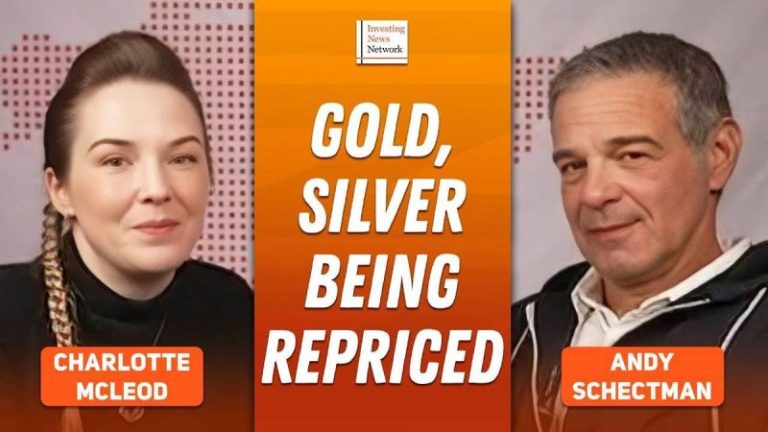
Andy Schectman, president of Miles Franklin, weighs in on the factors moving gold and silver, emphasizing that their long-term drivers remain in place.

‘Nothing goes straight up without taking a breather, but you can still coexist. That can coexist with long-term bullishness, and I am hugely long-term bullish,’ he said.

Securities Disclosure: I, Charlotte McLeod, hold no direct investment interest in any company mentioned in this article.

This post appeared first on investingnews.com

Gold and silver are wrapping up a record-setting week once again.

Starting with gold, the yellow metal left market participants hanging last week after finishing just shy of US$5,000 per ounce. However, it made up for it in spades this week, breaking through that level and continuing on up to smash through US$5,500.

Silver was no slouch either. After hitting triple digits at the end of last week it moved even higher this week, spending time above US$121 per ounce.

Unfortunately, it didn’t take long for those questions to be answered.

Gold and silver prices dropped precipitously as the week drew to a close, with the yellow metal finishing Friday (January 30) just below US$4,900 and silver sitting at about the US$85 level.

What’s going on, and more importantly, what should investors do?

Let’s tackle what’s going on first. The broad consensus from the experts I spoke to at VRIC was that gold and silver prices continue to be driven by elements that have been in play for years, such as strong central bank gold buying and silver’s persistent deficit. But both metals have new factors contributing to their gains.

Adrian Day of Adrian Day Asset Management highlighted two points that have changed for gold, with the first being increasing global chaos. Here’s how he explained it:

Day also mentioned gold purchases from stablecoin issuer Tether as a new factor for gold:

On the silver side, the dynamics are undeniably complex, but Willem Middelkoop of the Commodity Discovery Fund summed it up like this:

So how should investors approach this environment? Personalization was a major theme among the people I spoke to at VRIC, with many emphasizing the importance of understanding why you own the assets in your portfolio and what circumstances would lead you to sell.

Here’s Lobo Tiggre of IndependentSpeculator.com on how that could look right now:

With that said, two key themes emerged when it comes to what experts are doing now.

The first is silver stocks. Multiple market watchers, including Rick Rule of Rule Investment Media, believe silver stocks are set to move higher now that the metal itself has broken out.

Rule said he sold 80 percent of his physical silver and used around half of the money to buy silver companies. This is why he did it:

The second place people are rotating to is oil and gas stocks. You may remember that I touched on this in last week’s video, and the theme strengthened at VRIC — Rick himself took 25 percent of the money he made selling physical silver and put it in oil and gas stocks.

While opinions differ on whether now is the exact right time to buy, I heard multiple times that senior dividend-paying oil and gas companies are a play to consider for those who have taken profits in the gold and silver sector and are looking for the next ‘buy low’ opportunity.

Securities Disclosure: I, Charlotte McLeod, hold no direct investment interest in any company mentioned in this article.

This post appeared first on investingnews.com

Co-Listing Expands U.S. Investor Access and Visibility in World’s Largest Aviation and Capital Markets

Syntholene Energy CORP (TSXV: ESAF,OTC:SYNTF) (OTCQB: SYNTF) (FSE: 3DD0) (‘Syntholene’ or the ‘Company’) announces that its common shares have been approved for quotation and have commenced trading on the OTCQB Venture Market in the United States under the trading symbol SYNTF. The OTCQB co-listing is intended to broaden the Company’s U.S. investor audience and increase visibility within the world’s largest aviation fuel, capital markets, and energy infrastructure ecosystem.

The OTCQB Venture Market, operated by OTC Markets Group Inc., is a recognized public market in the United States designed for early-stage and developing companies that meet verified reporting and compliance standards. The Company’s primary listing remains on the TSX Venture Exchange under the symbol ESAF.

‘Establishing a U.S. trading presence on the OTCQB is a strategically important step for Syntholene,’ stated Syntholene CEO Dan Sutton. ‘The United States represents the largest aviation market globally and a core center of capital formation for energy and infrastructure investment. Providing U.S. investors with direct access to our shares aligns our capital markets strategy with the jurisdictions driving both demand growth and project financing for synthetic fuels. We view this co-listing as a natural extension of our TSX Venture Exchange and Frankfurt listings, as well as an important foundation for long-term engagement with U.S. institutional, strategic, and retail investors.’

Syntholene believes the OTCQB quotation enhances the Company’s visibility and accessibility in the United States at a time when policy support for sustainable aviation fuel and synthetic fuels is accelerating. U.S. federal and state initiatives, including tax credits, grant programs, and offtake support mechanisms under the Inflation Reduction Act and related Department of Energy and Department of Transportation programs, are driving increased investment into next-generation fuel production infrastructure.

About Syntholene

Syntholene is actively commercializing its novel Hybrid Thermal Production System for low-cost clean fuel synthesis. The target output is ultrapure synthetic jet fuel, manufactured at 70% lower cost than the nearest competing technology today. The company’s mission is to deliver the world’s first truly high-performance, low-cost, and carbon-neutral synthetic fuel at an industrial scale, unlocking the potential to produce clean synthetic fuel at lower cost than fossil fuels, for the first time.

Syntholene’s power-to-liquid strategy harnesses thermal energy to power proprietary integrations of hydrogen production and fuel synthesis. Syntholene has secured 20MW of dedicated energy to support the Company’s upcoming demonstration facility and commercial scale-up.

Founded by experienced operators across advanced energy infrastructure, nuclear technology, low-emissions steel refining, process engineering, and capital markets, Syntholene aims to be the first team to deliver a scalable modular production platform for cost-competitive synthetic fuel, thus accelerating the commercialization of carbon-neutral eFuels across global markets.

For further information, please contact:
Dan Sutton, CEO
comms@syntholene.com 
www.syntholene.com
+1 608-305-4835

Investor Relations
KIN Communications Inc.
604-684-6730
ESAF@kincommunications.com

Neither TSX Venture Exchange nor its Regulation Services Provider (as that term is defined in policies of the TSX Venture Exchange) accepts responsibility for the adequacy or accuracy of this release.

Forward-Looking Statements
This press release contains forward-looking statements within the meaning of applicable securities laws. The use of any of the words ‘expect’, ‘anticipate’, ‘aims’, ‘continue’, ‘estimate’, ‘objective’, ‘may’, ‘will’, ‘project’, ‘should’, ‘believe’, ‘plans’, ‘intends’ and similar expressions are intended to identify forward-looking information or statements. All statements, other than statements of historical fact, including but not limited to statements regarding the development and intended benefits of the Company’s technology, commercial scalability, technical and economic viability, anticipated geothermal power availability, anticipated benefit of eFuel, and future commercial opportunities, are forward-looking statements.

The forward-looking statements and information are based on certain key expectations and assumptions made by the Company, including without limitation the assumption that the Company will be able to execute its business plan, that the eFuel will have its expected benefits, that there will be market adoption, and that the Company will be able to access financing as needed to fund its business plan. Although the Company believes that the expectations and assumptions on which such forward-looking statements and information are based are reasonable, undue reliance should not be placed on the forward-looking statements and information because the Company can give no assurance that they will prove to be correct. Since forward-looking statements and information address future events and conditions, by their very nature, they involve inherent risks and uncertainties.

Actual results could differ materially from those currently anticipated due to a number of factors and risks, including, without limitation, Syntholene’s ability to meet production targets, realize projected economic benefits, overcome technical challenges, secure financing, maintain regulatory compliance, manage geopolitical risks, and successfully negotiate definitive terms. Syntholene does not undertake any obligation to update or revise these forward-looking statements, except as required by applicable securities laws.

Readers are advised to exercise caution and not to place undue reliance on these forward-looking statements.

To view the source version of this press release, please visit https://www.newsfilecorp.com/release/282096

News Provided by TMX Newsfile via QuoteMedia

This post appeared first on investingnews.com

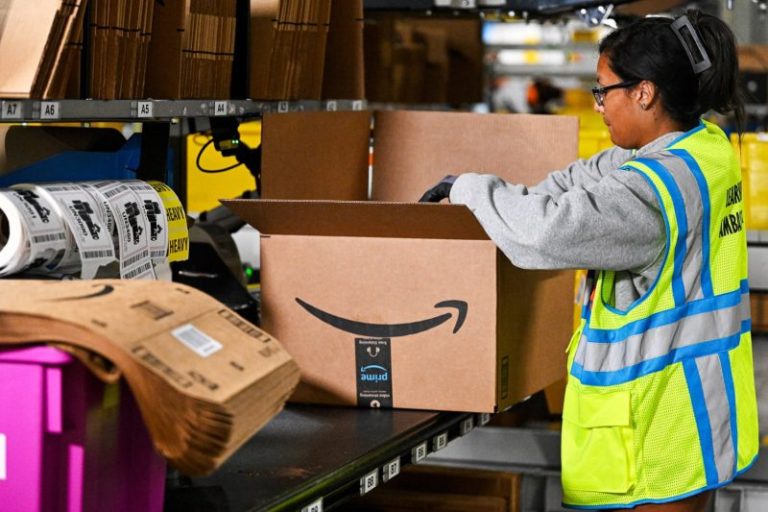
Amazon said Wednesday it was slashing another 16,000 jobs across the company in an ongoing bid to restructure the sprawling trillion-dollar firm.

‘The reductions we are making today will impact approximately 16,000 roles across Amazon, and we’re again working hard to support everyone whose role is impacted,’ Beth Galetti, Amazon’s senior vice president of people experience and technology, said in a memo to employees.

‘That starts with offering most US-based employees 90 days to look for a new role internally,’ she said. Amazon will ‘continue hiring and investing in strategic areas and functions that are critical to our future.’

Galetti said the cuts would ‘strengthen our organization by reducing layers, increasing ownership, and removing bureaucracy.’

In October, Amazon cut 14,000 jobs primarily at the corporate level. At the time, Galetti cited artificial intelligence as being the “most transformative technology we’ve seen since the internet.”

Amazon has 1.55 million employees worldwide, the company said in a filing last year.

It said Tuesday that it would close some of its Amazon Go and Amazon Fresh physical stores, planning to convert some into Whole Foods Market stores.

While AI was not explicitly cited in Wednesday’s note to Amazon workers, the cuts come as workers nationwide brace for the impact of artificial intelligence in a sluggish labor market.

Companies have started citing ‘efficiency’ as they pursue the implementation of AI.

On Monday, Goldman Sachs CEO David Solomon said that his firm’s headcount would be ‘more constrained in 2026’ as the company sees ‘opportunities for efficiency and we try to deploy those.’

On Tuesday, Pinterest said it would cut 15% of its workforce as it pivoted ‘resources to AI-focused roles and teams that drive AI adoption and execution.’

Last year, Microsoft said it was eliminating 9,000 jobs to improve efficiency. Target also cut 1,800 corporate jobs to reduce ‘complexity.’ Instagram and Facebook owner Meta Platforms also reduced its workforce by around 600 jobs as it shifted toward artificial intelligence.

At the same time, hiring nationwide is slowing and inflation remains elevated.

After three months of contraction last year, the U.S. economy added only 56,000 jobs in November and just 50,000 in December. Meanwhile, inflation remains at 2.7%, well above the Federal Reserve’s target of 2%.

This post appeared first on NBC NEWS