
Author

admin

Browsing

Rescuers pulled six crew members alive from the Red Sea after Houthi militants attacked and sank a second ship this week, while the fate of another 15 was unknown after the Iran-aligned group said they held some of the seafarers.

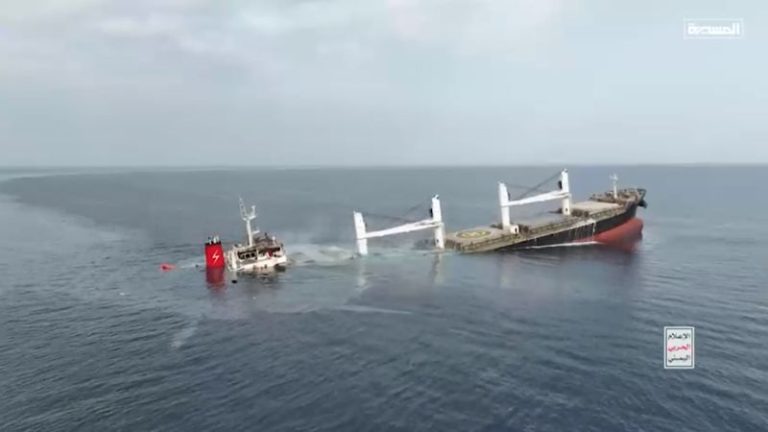
The Houthis claimed responsibility for the assault that maritime officials say killed four of the 25 people aboard the Eternity C before the rest abandoned the cargo ship. Eternity C went down Wednesday morning after attacks on two previous days, sources at security companies involved in a rescue operation said.

The six rescued seafarers spent more than 24 hours in the water, those firms said.

The United States Mission in Yemen accused the Houthis of kidnapping many surviving crew members from Eternity C and called for their immediate and unconditional safe release.

“The Yemeni Navy responded to rescue a number of the ship’s crew, provide them with medical care, and transport them to a safe location,” the group’s military spokesperson said in a televised address.

The Houthis released a video they said depicted their attack on Eternity C. It included sound of a Yemen naval forces’ call for the crew to evacuate for rescue and showed explosions on the ship before it sank. Reuters could not independently verify the audio or the location of the ship, which it verified was the Eternity C.

The Houthis also have claimed responsibility for a similar assault on Sunday targeting another ship, the Magic Seas. All crew from the Magic Seas were rescued before it sank.

The strikes on the two ships revive a campaign by the Iran-aligned fighters who had attacked more than 100 ships from November 2023 to December 2024 in what they said was solidarity with the Palestinians. In May, the U.S. announced a surprise deal with the Houthis where it agreed to stop a bombing campaign against them in return for an end to shipping attacks, though the Houthis said the deal did not include sparing Israel.

Leading shipping industry associations, including the International Chamber of Shipping and BIMCO, denounced the deadly operation and called for robust maritime security in the region via a joint statement on Wednesday.

“These vessels have been attacked with callous disregard for the lives of innocent civilian seafarers,” they said.

“This tragedy illuminates the need for nations to maintain robust support in protecting shipping and vital sea lanes.”

The Eternity C and the Magic Seas both flew Liberia flags and were operated by Greek firms. Some of the sister vessels in each of their wider fleets had made calls to Israeli ports in the past year, shipping data analysis showed.

“We will continue to search for the remaining crew until the last light,” said an official at Greece-based maritime risk management firm Diaplous.

The EU’s Aspides naval mission, which protects Red Sea shipping, confirmed in a statement that six people had been pulled from the sea.

The Red Sea, which passes Yemen’s coast, has long been a critical waterway for the world’s oil and commodities but traffic has dropped sharply since the Houthi attacks began.

The number of daily sailings through the narrow Bab al-Mandab strait, at the southern tip of the Red Sea and a gateway to the Gulf of Aden, numbered 30 vessels on July 8, from 34 ships on July 6 and 43 on July 1, according to data from maritime data group Lloyd’s List Intelligence.

Oil prices rose on Wednesday, maintaining their highest levels since June 23, also due to the recent attacks on ships in the Red Sea.

Multiple attacks

Eternity C was first attacked on Monday afternoon with sea drones and rocket-propelled grenades fired from speed boats by suspected Houthi militants, maritime security sources said. Lifeboats were destroyed during the raid. By Tuesday morning the vessel was adrift and listing.

Two security sources told Reuters that the vessel was hit again with sea drones on Tuesday, forcing the crew and armed guards to abandon it. The Houthis stayed with the vessel until the early hours of Wednesday, one of the sources said.

Skiffs were in the area as rescue efforts were underway.

The crew comprised 21 Filipinos and one Russian. Three armed guards were also on board, including one Greek and one Indian, who was one of those rescued.

The vessel’s operator, Cosmoship Management, has not responded to requests for confirmation of casualties or injuries. If confirmed, the four reported deaths would be the first fatalities from attacks on shipping in the Red Sea since June 2024.

Greece has been in talks with Saudi Arabia, a key player in the region, over the latest incident, according to sources.
This post appeared first on cnn.com

Australian universities may lose funding if they’re not judged to be doing enough to address anti-Jewish hate crimes, according to new measures proposed by the country’s first antisemitism envoy.

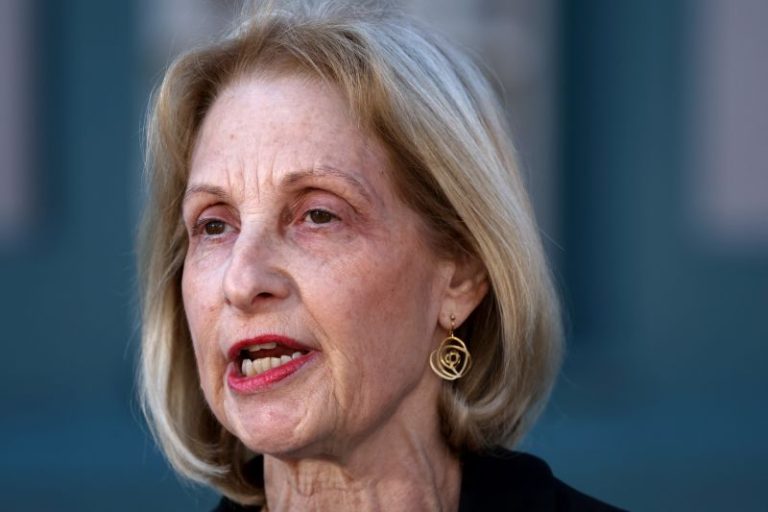
Jillian Segal was appointed to the role a year ago in response to a surge in reports of attacks against Jewish sites and property in Australia, following Israel’s invasion of Gaza, and was tasked with combating antisemitism in the country.

Standing alongside Prime Minister Anthony Albanese Thursday, Segal released a report nine months in the making proposing strong measures, including the university funding threats and the screening of visa applicants for extremist views.

“The plan is not about special treatment for one community; it is about restoring equal treatment,” Segal said. “It’s about ensuring that every Australian, regardless of their background or belief, can live, work, learn and prosper in this country.”

Like in the United States, Australian campuses were once the hub of pro-Palestinian protests led by students who pitched tents demanding action to stop Israel’s assault on Gaza.

The campus protests dwindled after restrictions were tightened and some protesters were threatened with expulsion, a move condemned by the activists as an infringement on free speech.

Segal’s report said antisemitism had become “ingrained and normalised” within academia and university courses, as well as on campuses, and recommended universities be made subject to annual report cards assessing their effectiveness in combating antisemitism.

Universities Australia chief executive Luke Sheehy said the organization had been working “constructively” with the special envoy and its members would “consider the recommendations.”

“Academic freedom and freedom of expression are core to the university mission, but they must be exercised with responsibility and never as a cover for hate or harassment,” he said in a statement.

Surge in antisemitism

Antisemitic attacks in Australia surged 300% in the year following Israel’s invasion of Gaza in October 2023.

In the past week alone, the door of a synagogue was set on fire in Melbourne, forcing 20 occupants to flee by a rear exit, as nearby protesters shouting “Death to the IDF” – using the initials of the Israeli military – stormed an Israeli-owned restaurant.

A man is facing arson charges over the synagogue attack, and three people were charged Tuesday with assault, affray, riotous behavior and criminal damage over the restaurant raid.

The Executive Council of Australian Jewry, which Segal once led and is the umbrella organization for hundreds of Jewish community groups, said the report’s release “could not be more timely given the recent appalling events in Melbourne.”

However, the Jewish Council of Australia, which opposes Israel’s war in Gaza, voiced concerns about Segal’s plan, saying it carried the overtones of US President Donald Trump’s attempts to use funding as a means of control over institutions.

In a statement, the council criticized the plan’s “emphasis on surveillance, censorship, and punitive control over the funding of cultural and educational institutions,” adding that they were “measures straight out of Trump’s authoritarian playbook.”

Max Kaiser, the group’s executive officer, said: “Any response that treats antisemitism as exceptional, while ignoring Islamophobia, anti-Palestinian racism, and other forms of hate, is doomed to fail.”

Education, immigration and the arts

The envoy’s 20-page plan includes sweeping recommendations covering schools, immigration, media, policing and public awareness campaigns.

Segal wants Holocaust and antisemitism education baked into the national curriculum “as a major case study of where unchecked antisemitism can lead,” according to the report.

Arts organizations could be subject to the same restrictions as universities, with threats to pull public funding if they’re found to have engaged in, or facilitated, antisemitism.

“While freedom of expression, particularly artistic expression, is vital to cultural richness and should be protected, funding provided by Australian taxpayers should not be used to promote division or spread false/ distorted narratives,” the report said.

Under the recommendations, tougher immigration screening would weed out people with antisemitic views, and the Migration Act would enable authorities to cancel visas for antisemitic conduct.

Media would be monitored to “encourage accurate, fair and responsible reporting” and to “avoid accepting false or distorted narratives,” the report added.

During Thursday’s press conference, Albanese pointed to an interview on the country’s national broadcaster with a protester, saying the interviewee tried to justify the Melbourne restaurant attack.

“There is no justification for that whatsoever,” he said. “The idea that somehow the cause of justice for Palestinians is advanced by behavior like that is not only delusional, it is destructive, and it is not consistent with how you are able to put forward your views respectfully in a democracy,” he said.

Asked if the country had become less tolerant of different views and had, perhaps, lost the ability to have a debate, Albanese pointed to social media.

“I think there is an impact of social media, where algorithms work to reinforce people’s views,” he said. “They reinforce views, and they push people towards extremes, whether it be extreme left, extreme right. Australians want a country that is in the center.”

His comments came as Grok, X’s AI chatbot, was called out for spreading antisemitic tropes that the company said it was “actively working to remove.”

Albanese said, regarding antisemitic views, “social media has a social responsibility, and they need to be held to account.”

Asked whether anti-Israel protests were fueling the antisemitic attacks, the prime minister said people should be able to express their views without resorting to hate.

“In Israel itself, as a democracy, there is protest against actions of the government, and in a democracy, you should be able to express your view here in Australia about events overseas,” he said. “Where the line has been crossed is in blaming and identifying people because they happen to be Jewish.”

This post appeared first on cnn.com