
Author

admin

Browsing

CHICAGO — Cardi B was part of Bad Bunny’s Super Bowl halftime show. What she did exactly, well, that turned into a perplexing question for two major prediction markets.

At least one Kalshi trader filed a complaint with the Commodity Futures Trading Commission over how the prediction market handled Sunday’s appearance by the Grammy-winning rapper. The result of a similar event contract on Polymarket also drew the ire of some users on that platform.

Prediction markets provide an opportunity to trade — or wager — on the result of future events. The markets are comprised of typically yes-or-no questions called event contracts, with the prices connected to what traders are willing to pay, which theoretically indicates the perceived probability of an event occurring.

The buy-in for each contract ranges from $0 to $1 each, reflecting a 0% to 100% chance of what traders think could happen.

More than $47.3 million was wagered on Kalshi’s market for “ Who will perform at the Big Game? ” A Polymarket contract had more than $10 million in volume.

Celebrities including Pedro Pascal, Karol G and Cardi B during the Super Bowl halftime show on Sunday.Kevin Mazur / Getty Images for Roc Nation

Cardi B joined singers Karol G and Young Miko and actors Jessica Alba and Pedro Pascal on a starry front porch during the halftime spectacle. She danced to the music, but it was unclear whether she was singing along during the show, which included performances by Ricky Martin and Lady Gaga.

Due to “ambiguity over whether or not Cardi B’s attendance at the 2026 Super Bowl halftime show constituted a qualifying ‘performance,’” Kalshi cited one of its rules in settling the market at the last price before trading was paused: $0.74 for No holders and $0.26 for Yes holders. The platform returned all the money to its users.

Polymarket’s contract was resolved as Cardi B had performed, but the yes was disputed. A final decision on the contract is expected to be announced on Wednesday.

In the CFTC complaint — first reported by the Event Horizon newsletter and posted by Front Office Sports — the trader alleges that Kalshi violated the Commodity Exchange Act with how it resolved the Cardi B contract. The trader — a Yes holder — is seeking $3,700.

A CFTC spokesman declined comment on Wednesday.

The Super Bowl capped a big NFL season for prediction markets.

Kalshi reported a daily record high of more than $1 billion in total trading volume on the day of the game, an increase of more than 2,700% compared to last year’s Super Bowl. The season-long total for all Super Bowl winner futures was $828.6 million, up more than 2,000% from last year.

The increased activity on Sunday caused some deposit issues. Kalshi co-founder Luana Lopes Lara posted on X on Monday that the “traffic spike was way bigger than our most optimistic forecasts.” She said the platform had reimbursed processing fees on the effected deposits and added credits to users who experienced delays.

Robinhood Markets highlighted the strength of its prediction markets when it announced its financial results for the fourth quarter and full 2025 on Tuesday.

“I think we are just at the beginning of a prediction market super cycle that could drive trillions in annual volume over time,” CEO Vlad Tenev said during an earnings call. “This year is going to be a big year. Olympics are going on right now. World Cup coming in the summer.”


This post appeared first on NBC NEWS

Sirios Resources (TSXV:SOI,OTCQB:SIREF) is a Québec-based gold exploration and development company focused on high-potential projects in the Eeyou Istchee James Bay region. Its flagship Cheechoo gold project ranks among the largest in the province by resource size and benefits from favourable geology, near-surface mineralization, and existing infrastructure, including road access, power lines, and proximity to the Éléonore mine. Sirios is advancing Cheechoo through systematic drilling, resource expansion, and technical studies, aiming to progress the project toward a Preliminary Economic Assessment (PEA).

In December 2025, Sirios completed a transformational combination with OVI Mining, creating a district-scale gold platform anchored by Cheechoo and complemented by the Corvet Est and PLEX projects. The transaction integrates Sirios into the Osisko development ecosystem, strengthening the leadership team with proven mine-building and capital markets expertise while maintaining the company’s deep geological knowledge of the James Bay region.

With over 30 years of continuous exploration in James Bay and strong partnerships with local and Indigenous communities, Sirios is well-positioned to create value through disciplined project advancement and exploration-driven growth. The company’s combination of experience, strategic assets, and community engagement underpins its long-term growth strategy.

Company Highlights

  • Flagship Cheechoo gold project hosts approximately 3 million ounces of gold, including 1.3 million ounces indicated and 1.7 million ounces inferred, including additional underground resources
  • Located in Eeyou Istchee James Bay, Québec, a Tier-1 mining jurisdiction with strong government and community support
  • Low strip ratio (2.9:1) and high gold recoveries (92 percent) support attractive open-pit development potential at Cheechoo
  • Strategic combination with OVI Mining brings Osisko-backed leadership, capital markets strength and additional district-scale exploration assets
  • Well-funded with recent treasury additions, supporting advancement of Cheechoo toward a preliminary economic assessment (PEA) and ongoing exploration across the portfolio

This Sirios Resources profile is part of a paid investor education campaign.*

Click here to connect with Sirios Resources (TSXV:SOI) to receive an Investor Presentation

This post appeared first on investingnews.com

The operator of roughly 180 Eddie Bauer stores across the U.S. and Canada has filed for Chapter 11 bankruptcy protection, blaming declining sales and a litany of other industry headwinds.

The bankruptcy filing marks the third time in a little over two decades for the storied-but-now-tired brand that began as a Seattle fishing shop, later outfitted the first American to climb Mount Everest and made thousands of newfangled down jackets and sleeping bags for the military during World War II.

Eddie Bauer LLC said Monday it had entered into a restructuring pact with its secured lenders as it made the filing in the U.S. Bankruptcy Court for the District of New Jersey.

Most Eddie Bauer retail and outlet stores in the U.S. and Canada will remain open as the company winds down certain locations. It noted that it will conduct a court-supervised sales process, and if a sale can’t be executed, it will begin a wind-down of its U.S. and Canadian operations.

“This is not an easy decision,” said Marc Rosen, CEO of Catalyst Brands, which maintains the license to operate Eddie Bauer stores in the U.S. and Canada. “However, this restructuring is the best way to optimize value for the retail company’s stakeholders and also ensure Catalyst Brands remains profitable and with strong liquidity and cash flow.”

Eddie Bauer’s stores outside of the U.S. and Canada are operated by other licensees, are not included in the Chapter 11 filings, and will stay open, according to the release.

Authentic Brands Group continues to own the intellectual property associated with the Eddie Bauer brand and may license the brand to other operators, the company said. The operations of other brands in the Catalyst Brands portfolio are not affected by this filing and will continue in the normal course, according to the company.

Eddie Bauer’s e-commerce and wholesale operations will also not be impacted by the wind down, as they are operated by a company called Outdoor 5, LLC. That was a transition it made in January and became effective Feb. 2.

Eddie Bauer joins a growing list of U.S. retailers this year that are closing stores, as companies reorganize under bankruptcy protection or pare down their operations to focus on the most profitable businesses.

The parent company of Saks Fifth Avenue said last month that it was seeking bankruptcy protection, buffeted by rising competition and the massive debt it took on to buy its rival in the luxury sector, Neiman Marcus, just over a year ago. A few days later, the parent company said it was closing most of its Saks Off 5th stores.

Amazon said earlier this month that it was closing almost all of its Amazon Go and Amazon Fresh locations within days as it narrows its focus on food delivery and its grocery chain, Whole Foods Market.

Eddie Bauer’s namesake founder — an avid outdoorsman — started the company in Seattle in 1920 as Bauer’s Sports Shop, according to the brand’s website. In 1945, after making more than 50,000 jackets for the military, it launched a mail-order catalog.

“Bauer’s Sports Shop was not just a place where people purchased clothing and gear, it was a community hub where folks gathered to share their wisdom, learn, and talk about their experiences in the outdoors,” the website says.

The company created an American goose-down insulated jacket, known as the “Skyliner,” in 1936, and it became the company’s first patented jacket. It also outfitted the first American to climb Mount Everest — James W. Whittaker — with an Eddie Bauer parka in 1963.

After Bauer retired in 1968 and sold the business to his partner, the outdoor brand shifted more toward casual apparel and was bought by General Mills Inc. in 1971 and then by Spiegel Inc. in 1988. After Spiegel filed for bankruptcy in 2003 and most of its assets were sold, the remainder of the company was reorganized in 2005 as Eddie Bauer Holdings Inc.

In June 2009, Eddie Bauer filed bankruptcy and was acquired by Golden State Capital, the following month. In 2021, it was acquired by Authentic Brands and SPARC Group LLC.

A year ago, Catalyst was formed by the merger of SPARC and JCPenney, which Simon Property Group and fellow mall landlord Brookfield bought out of bankruptcy.

Rosen noted that even prior to the inception of Catalyst Brands last year, Eddie Bauer was in a “challenged situation.”

“Over the past year, these challenges have been exacerbated by various headwinds, including increased costs of doing business due to inflation, ongoing tariff uncertainty, and other factors,” he said.

He noted that while Catalyst’s leadership was able to make improvements in product development and marketing, those changes could not be implemented fast enough to fully address the problems created over several years.

Eddie Bauer had nearly 600 stores at its peak in 2001, according to CoStar Group Inc., a commercial real estate data firm.

In a note published earlier this month, Neil Saunders, managing director of GlobalData Retail, wrote that while the Eddie Bauer name is “well known,” the brand hasn’t kept pace with rivals like Swedish outdoor brand Fjallraven and Canadian label Arc’teryx. He also cited issues with quality deteriorating, which, for an outdoor brand measured by the performance of its products, is very problematic.

“And for many younger shoppers, the brand is seen as somewhat old-fashioned and a bit irrelevant,” he said.

This post appeared first on NBC NEWS

Rising geopolitical tensions, intensifying competition for critical minerals and the accelerating breakdown of the postwar global order were some of the key themes at the Vancouver Resource Investment Conference (VRIC) in late January, as investors grappled with what a volatile world means for capital, commodities and security of supply.

In a wide-ranging panel moderated by Jesse Day, legendary mining financier Frank Giustra joined retired US Army Colonel Douglas Macgregor and geopolitical analyst Dr. Pascal Lottaz to examine flashpoints from Iran to Greenland, and why resource investors can no longer separate geopolitics from the metals that underpin modern economies.

Giustra, president and CEO of Fiore Group and co-chair of the International Crisis Group, opened the discussion by warning that tensions with Iran are approaching a critical threshold, driven by competing US and Israeli objectives.

“Israel would like to see Iran taken out as a major regional power,” Giustra said. “The US would like to see a different Iran — one it could do business with and that has stable relations with its neighbours. Those objectives are not the same.”

He added that the presence of a US carrier strike group in the region underscores the risk of escalation, but questioned whether military action would achieve Washington’s goals. “Iran is simply too large for a strike to have the intended effect,” he said, pointing to the absence of a coherent long-term policy.

Colonel Macgregor was more blunt, warning the US is “on the precipice of war” with Iran and arguing that Washington’s strategic thinking mirrors failed efforts elsewhere.

“This is the same mindset that committed us to war in Ukraine,” Macgregor said. “Destroy the country, divide it, dominate it, and take its resources. It failed there, and it will fail in Iran.”

Dr. Lottaz, an adjunct researcher at Waseda University in Tokyo and host of the ‘Neutrality Studies’ channel, said unpredictability has become the defining feature of US foreign policy.

“What Israel does is done in conjunction with the US — they are effectively one team,” Lottaz said. “Carrier groups sitting offshore are not just deterrence. They are also sitting ducks. Ships can sink.”

Greenland, minerals and power politics

The panel then turned to Greenland, a region increasingly viewed through the lens of critical minerals and Arctic security.

Giustra dismissed claims that Greenland poses an immediate security risk from Russia or China, arguing instead that resource competition is the real driver. “Greenland has always been open for business,” he said.

“The idea that the US needs to own it to access minerals is simply false.”

Instead, Giustra described Washington’s posture as coercive. “It’s essentially putting a gun to Greenland’s head and saying, ‘We want to buy you.’”

For mining investors, Greenland represents both opportunity and risk.

The island hosts significant deposits of rare earth elements, graphite and other strategic metals essential to clean energy technologies, defence systems and advanced manufacturing. But political uncertainty, including pressure from major powers, complicates development timelines and capital allocation.

Macgregor argued that US ambitions in Greenland and Venezuela reflect more optics than strategy. “This administration loves big gestures,” he said. “But unless you control what happens on the ground, nothing really changes.”

Europe’s energy crisis and deindustrialization

Lottaz traced Europe’s economic strain, particularly Germany’s deindustrialization, back to energy policy decisions, including the shutdown of nuclear power and the loss of Russian gas supplies.

“Political leadership in Europe is increasingly detached from national interests,” he said. “What matters more is positioning within EU and transatlantic institutions.”

That disconnect has direct consequences for resource markets, particularly energy-intensive industries such as metals refining, steel production and battery manufacturing, which depend on stable, affordable power.

Macgregor added that many global institutions, including NATO and the European Union, are approaching “block obsolescence,” forcing investors to rethink long-held assumptions about stability.

Critical minerals and the risk of conflict

As the discussion widened, Giustra pointed to critical minerals as one of the most dangerous fault lines in the emerging world order.

“The intense competition between China and the West over critical minerals is a major factor,” he said. “These are not just economic assets — they’re strategic weapons.”

China currently dominates processing of rare earth elements, lithium chemicals and battery-grade materials, giving it leverage over Western supply chains. Efforts by the US, Europe and allies to secure alternative sources — from Greenland to Africa to South America — are reshaping investment flows across the mining sector.

Giustra warned that history shows transitions between declining and rising powers are rarely peaceful. “The danger of conflict during a shift in world order is extremely high,” he said. “We may already be setting the stage for something far worse.”

Is there room for optimism?

Despite the grim outlook, Lottaz offered cautious optimism, arguing that even strained international systems retain some restraining influence.

“Everyone still claims to operate under the UN Charter, even when they violate it,” he said. “That tells us the idea of international law still matters.”

He also pointed to restraint in conflicts such as Ukraine, noting that NATO has avoided direct war with Russia. “There is still rationality at work. No one wants Armageddon.”

Macgregor closed with a stark reminder for investors and policymakers alike. “Rules only exist if someone enforces them,” he said. “As American power recedes, we’re entering a far more competitive and uncertain world.”

For the resource sector, that uncertainty translates into higher geopolitical risk, but also strategic opportunity. As governments scramble to secure supply chains for energy transition metals, defence materials and critical infrastructure, mining projects once considered peripheral are moving to the centre of global power politics.

Securities Disclosure: I, Georgia Williams, hold no direct investment interest in any company mentioned in this article.

This post appeared first on investingnews.com

LOS ANGELES — The world’s biggest social media companies face several landmark trials this year that seek to hold them responsible for harms to children who use their platforms. Opening statements for the first, in Los Angeles County Superior Court, begin this week.

Instagram’s parent company Meta and Google’s YouTube will face claims that their platforms deliberately addict and harm children. TikTok and Snap, which were originally named in the lawsuit, settled for undisclosed sums.

“This was only the first case — there are hundreds of parents and school districts in the social media addiction trials that start today, and sadly, new families every day who are speaking out and bringing Big Tech to court for its deliberately harmful products,” said Sacha Haworth, executive director of the nonprofit Tech Oversight Project.

At the core of the case is a 19-year-old identified only by the initials “KGM,” whose case could determine how thousands of other, similar lawsuits against social media companies will play out. She and two other plaintiffs have been selected for bellwether trials — essentially test cases for both sides to see how their arguments play out before a jury and what damages, if any, may be awarded, said Clay Calvert, a nonresident senior fellow of technology policy studies at the American Enterprise Institute.

It’s the first time the companies will argue their case before a jury, and the outcome could have profound effects on their businesses and how they will handle children using their platforms.

KGM claims that her use of social media from an early age addicted her to the technology and exacerbated depression and suicidal thoughts. Importantly, the lawsuit claims that this was done through deliberate design choices made by companies that sought to make their platforms more addictive to children to boost profits. This argument, if successful, could sidestep the companies’ First Amendment shield and Section 230, which protects tech companies from liability for material posted on their platforms.

“Borrowing heavily from the behavioral and neurobiological techniques used by slot machines and exploited by the cigarette industry, Defendants deliberately embedded in their products an array of design features aimed at maximizing youth engagement to drive advertising revenue,” the lawsuit says.

Executives, including Meta CEO Mark Zuckerberg, are expected to testify at the trial, which will last six to eight weeks. Experts have drawn similarities to the Big Tobacco trials that led to a 1998 settlement requiring cigarette companies to pay billions in health care costs and restrict marketing targeting minors.

“Plaintiffs are not merely the collateral damage of Defendants’ products,” the lawsuit says. “They are the direct victims of the intentional product design choices made by each Defendant. They are the intended targets of the harmful features that pushed them into self-destructive feedback loops.”

The tech companies dispute the claims that their products deliberately harm children, citing a bevy of safeguards they have added over the years and arguing that they are not liable for content posted on their sites by third parties.

“Recently, a number of lawsuits have attempted to place the blame for teen mental health struggles squarely on social media companies,” Meta said in a recent blog post. “But this oversimplifies a serious issue. Clinicians and researchers find that mental health is a deeply complex and multifaceted issue, and trends regarding teens’ well-being aren’t clear-cut or universal. Narrowing the challenges faced by teens to a single factor ignores the scientific research and the many stressors impacting young people today, like academic pressure, school safety, socio-economic challenges and substance abuse.”

A Meta spokesperson said in a recent statement that the company strongly disagrees with the allegations outlined in the lawsuit and that it’s “confident the evidence will show our longstanding commitment to supporting young people.”

José Castañeda, a Google Spokesperson, said that the allegations against YouTube are “simply not true.” In a statement, he said, “Providing young people with a safer, healthier experience has always been core to our work.”

The case will be the first in a slew of cases beginning this year that seek to hold social media companies responsible for harming children’s mental well-being.

In New Mexico, opening statements begin Monday for trial on allegations that Meta and its social media platforms have failed to protect young users from sexual exploitation, following an undercover online investigation. Attorney General Raúl Torrez in late 2023 sued Meta and Zuckerberg, who was later dropped from the suit.

Prosecutors have said that New Mexico is not seeking to hold Meta accountable for its content but rather its role in pushing out that content through complex algorithms that proliferate material that can be harmful, saying they uncovered internal documents in which Meta employees estimate that about 100,000 children every day are subjected to sexual harassment on the company’s platforms.

Meta denies the civil charges while accusing Torrez of cherry-picking select documents and making “sensationalist” arguments. The company says it has consulted with parents and law enforcement to introduce built-in protections to social media accounts, along with settings and tools for parents.

A federal bellwether trial beginning in June in Oakland, California, will be the first to represent school districts that have sued social media platforms over harms to children.

In addition, more than 40 state attorneys general have filed lawsuits against Meta, claiming it is harming young people and contributing to the youth mental health crisis by deliberately designing features on Instagram and Facebook that addict children to its platforms. The majority of cases filed their lawsuits in federal court, but some sued in their respective states.

TikTok also faces similar lawsuits in more than a dozen states.

This post appeared first on NBC NEWS

Clear Commodity Network CEO and Mining Stock Daily host Trevor Hall opened his talk at the Vancouver Resource Investment Conference (VRIC) with a strong message: It is still possible to go broke in a bull market.

“I want to start with the simple but uncomfortable truth: most investors don’t lose money in bear markets,” he said.

“They lose it in bull markets. Bear markets are honest. Liquidity disappears; prices fall. Risk is obvious, and fear keeps people cautious. Bull markets, on the other hand, are deceptive.”

According to Hall, bull markets feed the idea that everything is working well.

Charts and spreadsheet data convince investors and business owners that it is the perfect time to make big decisions, making this the phase of the cycle where moves are based on impulse.

“Rising prices get confused with good business, compelling stores get confused with durable assets. Bull markets don’t expose bad ideas immediately; they carry, and that’s why the damage is so severe when cycles turn.”

For short, people get too excited, focusing on the potential weight of what they can earn soon without realizing how much they could lose in the long run.

Supercycle review

Ultimately, what is needed is a shift in mindset. Hall specified that the first point that has to be recognised is that bull markets do not mean that everyone is making money.

“High prices produce a false sense of security. They made marginal assets look competitive,” he said. “They mask permitting challenges, metallurgy issues, infrastructure gaps in management, weaknesses and too much capital changed too many projects simply because the spreadsheet said it works. Investors have need to learn from that in today’s market.”

Momentum is not directly proportional to skill, and government involvement does not eliminate risk.

He cited 2011 as the last super cycle that created enormous opportunities, but also created enormous mistakes.

At the time, companies jumped into spending on huge projects and capital expenditure blowout, not accounting for returns.

Some companies also lost control and went all in on mergers and acquisitions, while developers “pursued production growth for the sake of growth.”

The sector focused on volume, therefore burning investors. The market funded every project that screams as economic at high spot prices.

This lack of discipline led to over a decade’s worth of rebuilding mining credibility.

Now, the sector has changed. This time, companies that generate durable margins, stick to realistic timelines, manage risk and focus on humility will be rewarded.

It’s all in discipline.

Advice for companies

Hall specified certain aspects he believes investors who have learned from the super cycle are now looking for. We summarised them into five points:
  • Concrete de-risk plans with achievable milestones
  • Strict capital discipline, especially on operating and construction costs
  • Management teams with experience in leadership, permitting, engineering and community relations
  • Productive offtakes

“Capital is no longer betting solely on geology. It’s betting on execution,” the CEO stated. “Investors want to see alignment with users, so institutional investors are screening for policy alignment projects that strengthen domestic supply chains, support energy security and fit federal or state strategic priorities.”

Above all, across all this is transparency. Hall said that it is a must and called it “the new currency of trust in this sector.”

Advice for investors

“Many deposits look promising, far fewer have teams capable of construction and operations,” Hall said, adding that while high metal prices do help the sector, they also encourage a wave of marginal projects that do not deserve capital.

Maintaining high standards amidst high prices is vital. He advised investors to ask the following questions before making decisions:

  • Does the project work within conservative price limits or not? Does it have structural advantages?
  • Does it have grade, jurisdiction, scale and production cost?
  • Does the project matter? Does it solve a supply deficit?
  • Does it serve a strategic need, or is it simply additive but unnecessary?
  • Can management actually build it?

Making the right moves

Hall likened his industry recommendations to that of a chess game: make decisive moves and manage risks. It’s not just about what’s in front of you; it’s how you can win.

The industry is entering a new era where the investment cycle is not only driven by numbers and market forces, but by strategic necessity.

It is also the first time in decades that government capital, institutional capital and private capital are moving in the same direction, posing bigger opportunities.

Companies must learn to listen and execute to remain in the game for the next decade of resource development, and investors should come into the space with clear expectations.

“I think the ultimate word is check your discipline, because your discipline and your expectations need to be in line and more in tune than ever before,” Hall told companies.

“And for investors out there listening, you have to remember this: bull markets don’t make people rich by default; they reveal who already have the discipline.”

Securities Disclosure: I, Gabrielle de la Cruz, hold no direct investment interest in any company mentioned in this article.

This post appeared first on investingnews.com

Here’s a quick recap of the crypto landscape for Friday (February 6) as of 9:00 p.m. UTC.

Get the latest insights on Bitcoin, Ether and altcoins, along with a round-up of key cryptocurrency market news.

Bitcoin (BTC) was priced at US$70,178.66, up by 11.3 percent over 24 hours.

Bitcoin price performance, February 6, 2026.

Chart via TradingView.

Despite Friday’s gains, Bitcoin has fallen over 14 percent this week to lows below US$62,000.

Bitcoin has stopped behaving as an alternative safe-haven asset and has realigned with the risk asset cycle. Its high correlation with traditional financial markets, including a broad selloff in technology stocks, precious metals and equities, suggests a scenario of systemic stress and scarce liquidity.

Downward pressure intensified after key technical levels were broken, causing nearly US$770 million in leveraged long positions to be liquidated in 24 hours, suggesting the market’s ‘cleansing phase’ is ongoing.

The decline was exacerbated by a strong US dollar and rising bond yields, which reduced the appeal of non-yielding assets like cryptocurrencies, prompting a rotation into defensive assets.

In the short term, price action will be limited and vulnerable to renewed selling pressure as long as restrictive financial conditions and a defensive tone prevail in global markets. Stabilization requires an improvement in global financial conditions and Bitcoin’s ability to rebuild solid technical support.

Ether (ETH) was priced at US$2,052.03, up by 10 percent over the last 24 hours.

Altcoin price update

  • XRP (XRP) was priced at US$1.46, up by 25.2 over 24 hours.
  • Solana (SOL) was trading at US$87.37, up by 10.4 percent over 24 hours.

Securities Disclosure: I, Meagen Seatter, hold no direct investment interest in any company mentioned in this article.

This post appeared first on investingnews.com

For years, blockchain had promise in the finance industry, but lacked the liquidity and connectivity to scale.

Yuval Rooz, CEO and co-founder of Canton Network, believes that era is now ending.

The problem: Legacy friction

Traditional banking still depends on millions of costly, slow and error-prone messages as institutions attempt to reconcile fragmented records across systems.

Repurchase agreement (repo) trades highlight the problem. Moving cash and collateral typically requires multiple intermediaries, manual checks and settlement delays that can stretch for days.

Public blockchains such as Ethereum offer speed, but their full transparency creates a different obstacle, exposing sensitive transaction data that banks cannot legally or competitively disclose.

At the heart of the issue is a structural trade off. Banks need shared networks to scale efficiency, yet legacy infrastructure and open ledgers force a choice between operating in isolation or revealing too much information. The result has been a patchwork of private systems that protect data sovereignty, but sacrifice interoperability and efficiency.

Explaining how Canton’s technology removes that trade off, Rooz said:

“Banks built walled gardens because there was no way to share infrastructure without giving up control or privacy. What we’re seeing now is a gradual shift away from isolated systems toward shared rails where institutions retain sovereignty over their data, while still achieving interoperability.

‘That doesn’t mean internal systems disappear overnight, but it does mean the center of gravity shifts toward networks where counterparties can transact in real time.”

Canton’s solution: Privacy-enabled synchronization

Canton has created a shared ledger where institutions maintain private blockchains, yet synchronize seamlessly.

“I think critics misunderstand what financial institutions actually need,” Rooz explained. “Banks don’t want a system where everything is hidden, and they don’t want one where everything is public. They need a way to work together on shared processes, while keeping sensitive details private. That’s what Canton was designed for.”

In practice, JPMorgan keeps its ledger sovereign, while plugging into LSEG for atomic delivery-versus-payment (DvP) settlements, all without revealing private data. Sub-transaction privacy ensures only trade participants see details; to others, it’s invisible. This network of networks lets banks achieve interoperability without sacrificing control.

“(This) gives institutions a shared record they can trust, with configurable privacy at the protocol level to divulge transactional information only with involved parties. And because it’s built to connect different applications, firms can link markets and workflows together without sacrificing confidentiality,’ said Rooz.

“This combination is something traditional systems cannot offer and is why you’re seeing institutions move from pilots into production onchain,’ the expert added.

Live momentum: JPM Coin and tokenized repos

JPM Coin’s native integration is a strong signal that the market is maturing.

JPMorgan’s blockchain rail, with over US$1 trillion in processed volume, has fueled settlements across Canton’s ecosystem. Paired with LSEG’s tokenized deposits, which power live repo activity, there are now synchronized markets where DvP happens in seconds, not days.

Rooz highlighted the deeper impact, commenting, “Everyone notices the speed, but the collateral mobility is the substance beyond the headline. In legacy markets, collateral spends most of its life idle because moving it safely across systems requires messaging, reconciliation and time. Atomic settlement collapses those steps into a single transaction.’

He added, ‘When repos settle in seconds, collateral stops being static and becomes reusable. That improves liquidity, balance sheet efficiency and risk management.”

2026 outlook

JPM Coin and LSEG repos demonstrate Canton’s shift from pilots to production.

“We measure success by utilization,” said Rooz, adding, “Having Canton be the network where real transactions are taking place, and regulated assets are moving.’

He envisions steady expansion powering this transformation. Indeed, similar efforts are already live elsewhere, such as BlackRock’s BUIDL fund, which has tokenized US$1.7 billion in treasuries for 24/7 yields, and DRW Cumberland’s weekend repos, which use tokenized collateral with instant DvP settlements.

“I’d like to see more asset classes brought on to Canton, and the corresponding transaction volume we’re already seeing will continue to grow in the year ahead,’ said Rooz.

He sees this convergence accelerating across markets.

“Our ‘North Star’ is to drive the convergence of TradFi and DeFi onchain to create a new AllFi reality,’ he said.

Securities Disclosure: I, Meagen Seatter, hold no direct investment interest in any company mentioned in this article.

This post appeared first on investingnews.com

Anna Serin of the Canadian Securities Exchange (CSE) and Eduardo Carmona of the National Stock Exchange of Australia (NSX) discuss the CSE’s recent acquisition of the NSX, outlining what it means for both companies and investors.

‘What we’re hoping to create, and where we think the opportunity lies in Australia, is creating the venture market a little bit like the CSE’s done (in Canada),’ Carmona explained.

Securities Disclosure: I, Charlotte McLeod, hold no direct investment interest in any company mentioned in this article.

This post appeared first on investingnews.com

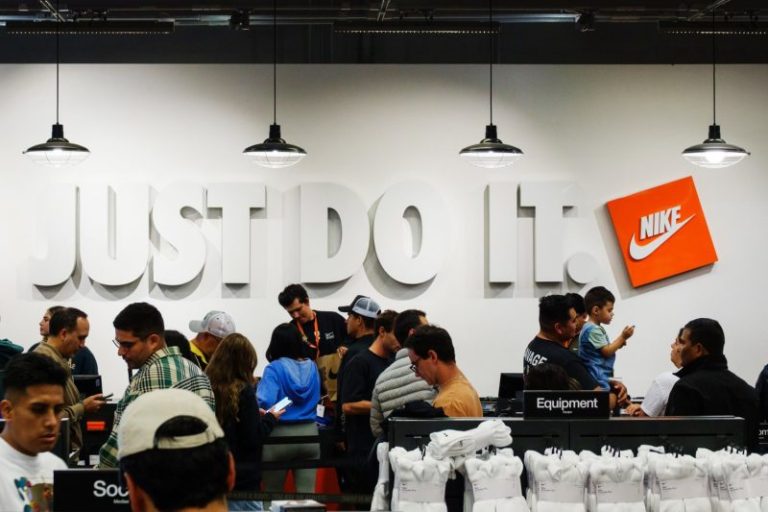
The U.S. Equal Employment Opportunity Commission said Wednesday that it is investigating Nike for allegedly discriminating against white workers.

The agency that polices discrimination in the workplace filed an action in federal court in Missouri to compel the publicly traded athletic shoe and apparel giant to produce information in response to a subpoena the agency served on the company last fall, according to court filings reviewed by NBC News.

The EEOC said it was investigating allegations that the company’s mentorship and training programs and its personnel decisions gave nonwhite employees preferential treatment that amounts, according to the agency, to discrimination against white workers.

Nike is the world’s largest sportswear and apparel company, with nearly 80,000 employees and revenues of around $51.4 billion in 2024.

The allegations were not made by workers at Nike who believed they had been the targets of unfair treatment, however, as is typically the case in EEOC investigations.

Instead, the court filings show that this case stems from a commissioner’s charge brought by then-commissioner Andrea Lucas herself in May 2024, and based on publicly available information such as Nike’s own annual “Impact Reports” and information on its public website.

The EEOC’s request that a judge enforce the subpoena is the latest instance of the Trump administration using a federal agency that is typically charged with preventing and responding to discrimination against nonwhite Americans, and deploying it instead to protect what it says are the underrepresented interests of white people.

Nike has objected in court to many of the EEOC’s demands to documents over the last several months, arguing that they are vague, overly broad, and seek information dating back to well before the period in question.

“This feels like a surprising and unusual escalation,” a Nike spokesperson said. “We have had extensive, good-faith participation in an EEOC inquiry into our personnel practices, programs, and decisions and have had ongoing efforts to provide information and engage constructively with the agency.”

The spokesperson added that Nike has shared “thousands of pages of information and detailed written responses” in connection with the agency’s inquiry and said the company is in the “process of providing additional information.” Nike will respond to the agency’s petition, the spokesperson said.

Lucas was appointed chair of the EEOC by President Donald Trump in November 2025 after serving as a commissioner since 2020, when the president nominated Lucas to the agency.

The agency said it filed the subpoena enforcement action after “first attempting to obtain voluntary compliance with its investigative requests.”

This post appeared first on NBC NEWS