Author

admin

Browsing

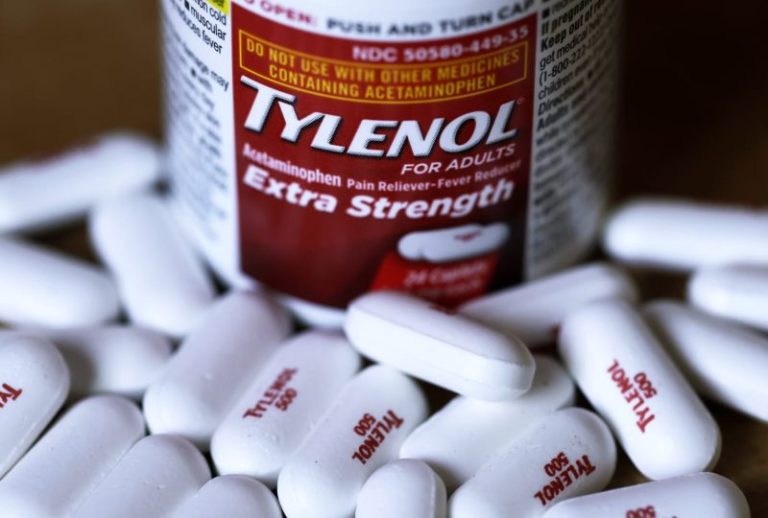
Kimberly-Clark said on Monday it will buy Tylenol maker Kenvue KVUE.N in a cash-and-stock deal valued at about $48.7 billion, to create one of the biggest consumer health goods companies in the United States.

Shares of Kenvue were up 18% in premarket trading, while Kimberly-Clark‘s shares were down 12.5%.

Kenvue has been under a strategic review, leadership shake-up, and mounting litigation risks. It came under fresh scrutiny following President Donald Trump’s comments linking its popular pain medicine Tylenol to autism.

The deal will bring together brands including Neutrogena, Huggies and Kleenex under a consumer health and personal care company with expected combined annual revenues of roughly $32 billion.

Sources in June told Reuters the strategic review of its operations could include a sale or breakup of the company that had been spun off from healthcare conglomerate Johnson & Johnson JNJ.N in 2023.

Kenvue‘s shareholders will receive $3.50 per share and 0.15 Kimberly-Clark shares for each Kenvue share held. That implies a per-share deal value of $21.01, or an equity value of $40.32 billion, according to Reuters calculations.

This post appeared first on NBC NEWS

Sarama Resources Ltd. (“Sarama” or the “Company”) (TSX-V:SWA, ASX:SRR) announces that it has filed its written Memorial (the “Memorial”) detailing the Company’s claim against the Government of Burkina Faso (“GoBF”) as well as damages for the sum of US$242 million, plus interest.

The proceedings arise from the unlawful expropriation of the Company’s Tankoro 2 Exploration Permit (the “Permit”) in Burkina Faso and follow the submission of its Request for Arbitration (“RFA”) to the International Centre for Settlement of Investment Disputes (“ICSID”) in December 2024 (refer news release dated 12 December 2024).

On 31 October 2025, Sarama filed its written Memorial comprising its statement of case, witness evidence, and expert reports with ICSID, a division of the World Bank Group, detailing the claim against the GoBF.

The Company retained Accuracy London, a qualified and experienced Quantum Expert, to provide an independent valuation to support the claim submitted to ICSID.

Next Steps

  • The GoBF is required to file its Counter-Memorial by 31 January 2026.
  • A case management conference is scheduled for 17 February 2026 during which the final Procedural Timetable will be determined and the date for the Procedural Hearing will be set.
  • This will be followed by a series of further written submissions, after which a hearing will be held in Washington D.C., United States where Sarama will present its case and supporting evidence to the Tribunal.

The Company is represented by Boies Schiller Flexner (UK) LLP (“BSF”), a leading international law firm with significant experience in investor-state arbitration and a strong track record in the natural resources sector and has a US$4.4 million four-year non-recourse loan facility in place to cover all fees and expenses related to the claim.

Sarama’s Executive Chairman, Andrew Dinning commented:

“The filing of our Memorial is a significant milestone in the arbitration process and provides a comprehensive and substantiated basis for Sarama’s claim for compensation. The Company has invested more than a decade of work and substantial capital in advancing the Sanutura Project, which was unlawfully expropriated.

We are pursuing this process to protect shareholder value and to seek a fair and just outcome under internationally recognised mechanisms. With our legal team, expert advisors and funding arrangements in place, we remain fully committed to advancing the arbitration to its conclusion.”


Click here for the full ASX Release

This post appeared first on investingnews.com

Cobalt prices regained momentum in the third quarter of 2025 as tighter export controls from the Democratic Republic of Congo (DRC) fueled expectations of a market rebound.

After languishing near multi-year lows early in the year, the metal surged to US$47,110 per metric ton in late October, its highest level since January 2023.

The DRC’s prolonged export suspension, followed by new quota limits, has begun to ease a years-long supply glut, with analysts now forecasting a shift from oversupply toward market balance.

All year-to-date and share price information was obtained on October 28, 2025, using TradingView’s stock screener. Companies with market caps above C$10 million at that time were considered.

1. Talon Metals (TSX:TLO)

Year-to-date gain: 358.82 percent
Market cap: C$440.55 million
Share price: C$0.39

Talon Metals is a base metals company advancing the Tamarack nickel-copper-cobalt project in Central Minnesota, US, through a joint venture with Rio Tinto (ASX:RIO,NYSE:RIO,LSE:RIO). Talon currently holds a 51 percent stake in the project and can earn up to 60 percent.

In late March, Talon Metals announced a massive sulfide discovery at its Tamarack project, with an intercept measuring 8.25 meters containing 95 percent sulfide content located deeper than the current Tamarack resource.

In May, a further massive sulfide discovery in the same zone, the thickest discovery yet at the site, drove the company’s share price up significantly, and another in early August did the same. In the August announcement, Talon shared that it named the discovery zone the Vault zone.

At the start of Q4, Talon announced an expanded winter drilling and exploration program at the Vault zone.

Shares of Talon rallied to a year-to-date high of C$0.54 on October 14, following the winter drill news and alongside rising cobalt prices.

On October 20, Talon received a 12 month extension from Rio Tinto subsidiary Kennecott Exploration to submit a feasibility study and US$10 million payment required to increase its ownership stake in the Tamarack project to 60 percent.

The extension will allow Talon to align the study’s release with the publication of the project’s scoping environmental assessment worksheet, expected in the first half of 2026, marking its entry into Minnesota’s formal environmental review process.

2. Leading Edge Materials (TSXV:LEM)

Year-to-date gain: 222.22 percent
Market cap: C$72.49 million
Share price: C$0.29

Leading Edge Materials is developing critical materials projects in the EU. The company’s projects include its wholly owned Woxna graphite mine and Norra Kärr heavy rare earth elements project, both in Sweden, as well as its 51 percent owned Bihor Sud nickel-cobalt exploration alliance in Romania.

According to its June 2025 presentation, exploration work planned for 2025 at Bihor Sud’s G2 gallery includes mapping and sampling of cobalt-nickel and zinc-lead-silver mineralized zones detected visually and by hand-held XRF. Drilling targeting polymetallic mineralization at the gallery is underway.

On the financial side, Leading Edge announced a C$400,000 non-brokered private placement in June.

According to a June 22 activities update, Leading Edge’s Romanian subsidiary was granted ownership and operational permits for the Avram Iancu mine at Bihor Sud, and the team had begun preliminary investigations of the site.

In its recent quarterly report, released September 19, Leading Edge Materials said it is reassessing its prospects after being granted those permits. at its project located within the Bihor Sud exploration area following the acquisition of additional ownership and operating permits.

The Avram Iancu site hosts extensive historic underground workings and data indicating copper-rich massive sulfide zones, the statement noted.

A competent person report is in progress to consolidate past exploration and outline next steps, while the company evaluates financing options to advance development.

Shares of Leading Edge also benefited from the mid-October cobalt price rally, registering a year-to-date high of C$0.44 on October 14.

3. Battery Mineral Resources (TSXV:BMR)

Year-to-date gain: 180 percent
Market cap: C$16.79 million
Share price: C$0.14

Battery Mineral Resources is focused on developing into a mid-tier copper producer and recently restarted mine and mill operations at the Punitaqui Mining Complex in Chile. In Canada, the company holds the largest land position in Ontario’s historic Cobalt district, where it is exploring high-grade primary cobalt deposits at McAra, Gowganda and Elk Lake.

The company’s portfolio also includes energy services and mineral exploration assets in North America, along with graphite projects in South Korea.

In late October, BMR said it was evaluating strategic options for its Gowganda silver tailings project, located northeast of Sudbury, Ontario.

The project lies in one of the country’s most productive past silver-cobalt districts, and the Gowganda mining camp produced 60 million ounces of silver and 1.3 million pounds of cobalt between 1910 and 1969. Gowganda hosts four former mines and associated tailings historically estimated to contain 2.96 million ounces of silver. BMR is assessing how best to advance or monetize the asset to enhance shareholder value.

On October 16, Battery Mineral Resources reported strong operational performance at its Punitaqui copper project in Chile, driven by improved underground production and plant optimization. Since September 1, 2025, underground operations have averaged 1,800 tonnes per day, up 80 percent from the first half of the year, and 2,000 tonnes per day over the recent two weeks period.

BMR is also advancing development of additional underground operations at Cinabrio Norte and Dalmacia to support further growth from Punitaqui.

The news pushed shares of BMR to a year-to-date high of C$0.17 on October 21.

4. FPX Nickel (TSXV:FPX)

Year-to-date gain: 95.74 percent
Market cap: C$144.81 million
Share price: C$0.46

FPX Nickel is currently advancing its Decar nickel district in BC, Canada.

The property comprises four key targets, with the Baptiste deposit being the primary focus, alongside the Van target. The company also has three other nickel projects in BC and one in the Yukon, Canada.

In February, FPX released a scoping study for the development of a refinery that would refine awaruite concentrate from Baptiste into battery-grade nickel sulfate and by-products of cobalt carbonate, copper and ammonium sulfate. Annual output is anticipated at 32,000 metric tons of contained nickel and 570 metric tons of contained cobalt.

The results show that the process would result in operating and all-in production costs near the bottom of nickel sulfate cost curve, in part due to by-product credits. Additionally, the carbon intensity of the awaruite refinery would be significantly lower than that of currently used production methods.

On September 4, FPX completed a large-scale mineral processing pilot campaign for its Baptiste nickel project, following three prior successful campaigns. The latest production run generated bulk samples of awaruite concentrate, which will be provided to prospective partners, including pre-cursor cathode active materials, battery producers and automakers, to assess its suitability as feedstock.

Later in the month, FPX signed an option agreement to acquire up to 100 percent of the Advocate nickel property in Newfoundland, Canada, following its review of over 50 targets. The property has also been accepted by the Japan Organization for Metals and Energy Security (JOGMEC) as the first designated property under the generative alliance between FPX and JOGMEC, with a significant work program planned to build on encouraging surface nickel recoveries.

FPX shares registered a year-to-date high of C$0.55 on October 17.

5. Wheaton Precious Metals (TSX:WPM)

Year-to-date gain: 61.23 percent
Market cap: C$60.38 billion
Share price: C$133.00

Wheaton Precious Metals is one of the largest gold and silver royalty and streaming companies.

It has investments in 18 operating mines and 28 development projects across four continents, including a cobalt streaming agreement for Vale’s (NYSE:VALE) Voisey’s Bay nickel mine in Newfoundland and Labrador, Canada.

According to Wheaton, Voisey’s Bay is currently in a transitional phase, shifting from the depleted Ovoid open pit to full underground production.

The company reported its Q1 financial results on May 8. The report highlighted a record US$470 million in revenue, US$254 million in net earnings and US$361 million in operating cash flow.

The cobalt segment registered year-on-year attributable production gains, rising to 540,000 pounds in the year’s first quarter, compared to 240,000 pounds during Q1 2024. Despite the output increase, sales fell to 265,000 pounds in Q1 versus 309,000 pounds in Q1 2024.

According to Wheaton’s Q2 2025 results, the Voisey’s Bay mine produced 647,000 pounds of attributable cobalt, a roughly 150 percent increase from the same period in 2024. Vale reported that the underground operations are steadily ramping up, with full production expected by the second half of 2026 as the transition from the depleted Ovoid open-pit continues.

Shares of Wheaton rose to a year-to-date high of C$159.41 on October 16 alongside rising prices for gold, silver and cobalt.

FAQs for cobalt

What is cobalt?

Cobalt is a silver-gray metal that is often produced as a by-product of nickel and copper mining. It does not occur as a separate metal anywhere in the world, and must be produced by reductive smelting, or from the metallic ore cobaltite, which is made of cobalt, sulfur and arsenic.

What is cobalt used for?

Historically, cobalt oxides were used to impart a blue pigment to glass, porcelain and paints, hence the still-used cobalt blue paint. The metal is also used to produce superalloys, as cobalt imparts qualities such as corrosion and wear resistance, which are useful in applications such as airplanes, orthopedics and prosthetics.

Today cobalt is most famously used in the rechargeable lithium-ion batteries that run everything from smartphones to EVs.

Where is cobalt mined?

The majority of cobalt production comes out of the DRC, which was responsible for producing 220,000 metric tons of the material in 2024. For perspective, the second largest cobalt-producing country, Indonesia, reported output of 28,000 MT the same year; third place Russia produced 8,700 MT of the material.

As the lithium-ion battery and EV supply chains garner global attention, companies are trying to limit their exposure to cobalt produced from the DRC, which is known for human rights abuses and sometimes child labor in its mining industry.

In response to this trend, many countries with cobalt are attempting to create domestic cobalt and EV supply chains in the hope of attracting companies looking to avoid DRC-sourced cobalt. This can be seen in the up-and-coming battery corridor in Ontario, Canada, as well as in the US-based Idaho cobalt belt.

Securities Disclosure: I, Georgia Williams, hold no direct investment interest in any company mentioned in this article.

This post appeared first on investingnews.com

Steve Barton, host of In It To Win It, weighs in on the pullback in gold and silver prices, sharing where the floors could be for both precious metals.

In his view, the correction is healthy and will lead to higher levels in the future.

Securities Disclosure: I, Charlotte McLeod, hold no direct investment interest in any company mentioned in this article.

This post appeared first on investingnews.com
Apex Resources (TSXV:APX,OTC:SLMLF) is a mineral exploration company with a diversified North American portfolio, combining near-term tungsten-gold opportunities in British Columbia with district-scale lithium potential in Nevada.

The company’s flagship Lithium Creek project in Churchill County, Nevada, represents a new lithium-brine discovery opportunity. Geophysical and gravity surveys have outlined extensive low-resistivity zones and complex basin structures—hallmarks of major brine systems—defining multiple drill targets. Just 70 km east of Reno and 30 minutes from Tesla’s Gigafactory, Lithium Creek is strategically positioned within the U.S. battery manufacturing corridor.

Drilling at the Jersey-Emerald project

The Jersey-Emerald project, Apex’s flagship Canadian asset, is a past-producing mine complex hosting tungsten, zinc, lead, gold, and molybdenum. Located 10 km southeast of Salmo, BC, it includes the former Emerald and Jersey mines—once among Canada’s largest producers. Apex is applying modern exploration and geophysics to expand critical mineral zones and identify new targets across the 17,500-hectare property.

Company Highlights

  • Critical-minerals focus: Apex’s portfolio is anchored by lithium, tungsten and zinc, all designated as critical by Canada and the US.
  • Precious-Metals (Gold&Silver) are important by-products at Jersey-Emerald
  • Diversified exploration pipeline: Active drill program at Jersey-Emerald (tungsten-gold-zinc) while preparing to drill Lithium Creek in Nevada.
  • Large-scale opportunity: Apex controls contiguous and nearby claim blocks around Salmo, BC, including Jersey-Emerald and Ore Hill, forming a multi-deposit critical- and precious-metal exploration district spanning more than 17,500 hectares with several historic mines, hosting Tungsten, Zinc, Lead, Silver, Gallium, Germanium, Indium, Bismuth, Tellurium and Molybdenum.
  • Strong early results in USA: Lithium Creek brine samples up to 393 mg/L lithium, with geophysics outlining multiple deep-basin anomalies.
  • Historic infrastructure advantage in Canada: More than $100 million in existing underground workings at Jersey-Emerald; year-round road, rail and power access to both BC projects.
  • Tier-1 jurisdictions: Stable, mining-friendly locations in British Columbia and Nevada with clear permitting frameworks.
  • Experienced leadership: Proven technical and capital-markets expertise led by CEO Ron Lang and a board made up of seasoned exploration and mining professionals.

This Apex Resources profile is part of a paid investor education campaign.*

Click here to connect with Apex Resources (TSXV:APX,OTC:SLMLF) to receive an Investor Presentation

This post appeared first on investingnews.com

Platinum and palladium have their own unique drivers, but both are basking in gold’s glow in 2025.

Of the two, platinum has been the biggest winner in 2025. The price of the precious metal briefly hit a year-to-date high of US$1,725 per ounce on October 16, a 90 percent increase from the start of the year. Although it’s since experienced a pullback below the US$1,600 level, the platinum price remains at 12 year highs.

As for palladium, its price was up nearly 80 percent by October 16 to reach its 2025 peak of US$1,630 per ounce. It too has fallen back since then, currently sitting at the US$1,430 level.

What’s next for platinum and palladium after those price runs? In its annual Precious Metals Investment Focus report, published on October 25, Metals Focus outlines key supply and demand trends, as well as its outlook for prices.

Platinum market reflecting more than gold’s shine

Platinum is no doubt benefiting from strong investor demand for precious metals. But the metal’s robust supply and demand fundamentals are also at play, according to Metals Focus analysts.

Aboveground inventories of platinum remain tight, while future mine production is bogged down in operational challenges. “In Southern Africa, outages and heavy rainfall have disrupted production, while North America is undergoing restructuring,” notes the report.

On the demand side, platinum usage from the jewelry sector has posted significant gains this year, especially in China. As the price of gold skyrockets, platinum jewelry has become a much more attractive alternative. Investment flows into platinum exchange-trade products in China and the US are another key demand driver for the metal this year.

Platinum and palladium prices.

Chart via Metals Focus, Bloomberg.

While platinum prices are at levels not seen in 12 years, palladium prices are only experiencing a two year high.

“Palladium has also benefited at the margin, but remains a laggard, with a more lacklustre fundamental outlook limiting investor enthusiasm,” according to Metals Focus.

2026: Platinum bull, palladium bear

Platinum prices will continue to benefit from the overall upward trend in precious metals prices for the remainder of 2025 and well into 2026. The ongoing supply deficit in the platinum market is also highly price-supportive.

Metals Focus is forecasting a third consecutive physical platinum deficit for this year, totaling 415,000 ounces as platinum mine output is expected to decline by 6 percent year-on-year.

Demand is projected to fall by 4 percent largely due to lower output in the glass and automotive sectors.

Platinum’s supply deficit is expected to continue into 2026 and grow to an estimated 480,000 ounces as mine supply falls by 2 percent to a 12 year low (excluding 2020). “With few new projects coming online after years of underinvestment, mine supply is undergoing structural decline,” the report’s authors note.

This will be happening at the same time as an expected 1 percent rebound in demand, buoyed by renewed industrial usage, specifically out of the glass and chemical sector in China.

Even so, Metals Focus cautions that demand out the automotive and jewelry sectors is likely to contract.

The trend toward electrification is the auto industry may have slowed, but it’s still expected to erode platinum demand, especially as catalytic converter manufacturers shift back to more cost-effective palladium.

Metals Focus is forecasting a 2026 average platinum price of US$1,670 per ounce, up 34 percent over the previous year.

Platinum and palladium price outlook.

Chart via Metals Focus, Bloomberg.

Looking over to palladium, Metals Focus has a more bearish view.

The firm is projecting palladium prices to average US$1,350 in Q4 2025, falling to US$1,150 by Q4 2026. Although the palladium market has been in a physical deficit for the past few years, that deficit is expected to shrink from 566,000 ounces in 2024 to 367,000 ounces in 2025 before narrowing even further to 178,000 ounces in 2026.

The same structural issues plaguing platinum are also of course weighing on palladium mine supply, which is forecast to fall by 3 percent in 2026. However, secondary supply is projected to increase by 10 percent as recycling activity recovers.

Overall, total palladium supply is expected to grow by 1 percent for the year. At the same time, demand for palladium is set to decline by just over 1 percent in 2026 on a drop from the automotive sector.

Investor takeaway

Both platinum and palladium are considered precious metals based on their rarity and use in jewelry fabrication and physical bullion. As such, they both are known to benefit when investor sentiment for safe-haven gold is high.

However, not all precious metals are precious to investors at the same time — just ask silver. Industrial usage of these metals is a much bigger driver of demand compared to the investment space. For 2026, it’s platinum that will continue to ride gold’s rally and provide investors with plenty of upside based on its strong fundamentals.

Securities Disclosure: I, Melissa Pistilli, currently hold no direct investment interest in any company mentioned in this article.

This post appeared first on investingnews.com
President Donald Trump’s tariffs are hitting toy giants Mattel and Hasbro as the critical holiday season nears. Still, both companies see a successful year end ahead.

“This quarter, our U.S. business was again challenged by industry-wide shifts in retailer ordering patterns,” CEO Ynon Kreiz said on Mattel’s recent earnings call. “That said, consumer demand for our products grew in every region, including in the U.S.”

During the most recent quarter, which ended Sept. 30, Mattel said sales slipped 6% globally, led by a 12% decline in North America. International sales rose 3%.

Some of the company’s top performing categories included Hot Wheels and action figures, primarily from the “Jurassic World,” Minecraft and WWE franchises.

Other Mattel brands saw a drop in sales, however, including Barbie and Fisher-Price.

With retail stores waiting until the last minute to assess the level of tariffs that would apply to their holiday orders, Kreiz said “since the beginning of the fourth quarter, orders from retailers in the U.S. have accelerated significantly.”

Retailers “expect strong demand for the holiday and they are restocking,” he added.

Meanwhile, rival toy giant Hasbro’s revenue jumped 8% in the quarter and it raised its financial guidance for the rest of the year.

Key drivers of that included “Peppa Pig” and Marvel franchise toys, as well as the Wizards of the Coast games.

Hasbro “managed tariff volatility with agility” and used price hikes to protect its margins, said Gina Goetter, the company’s chief financial officer and chief operating officer.

The company remains “firmly on track” to achieve its financial targets.

“As we calculate the various scenarios of where that absolute rates will play out, we’re really putting all of our levers to work,” she said on the company’s recent earnings call.

“From how we think about pricing, how we’re thinking about our product mix, how we’re thinking about our supply chain, and how we’re managing all of our operating expenses to mitigate and offset the impact” of tariffs, she said.

For its part, Hasbro also saw “softness” in the U.S. during the quarter due to retail chains waiting longer to place holiday orders, but said momentum is accelerating as the season gets underway.

In July, Mattel’s chief financial officer, Paul Ruh, said that the company was raising prices because of tariffs.

“We have implemented a variety of actions that will help us withstand some of those headwinds and those include … supply chain efficiencies and some pricing adjustments, particularly in the U.S.,” Ruh said on the company’s earnings conference call.

“So with that array of actions, we’re able to withstand some of the uncertainty that is mostly coming in the top line,” Ruh said. “Our goal is to keep prices as low as possible for our consumers.”

Still, Kreiz said that “consumers are buying our products and the toy industry is growing.”

He also said that consumers are taking price hikes in stride and those increases haven’t hurt demand: “We are not seeing any slowdown in consumer demand so far.”

Hasbro CEO Chris Cocks said the company has also raised some prices, but it was “pretty surgical” in what it chose to adjust.

“In terms of ongoing pricing, I think we just kind of have to see how the holiday goes and the consumer holds up,” he told analysts on the company’s earnings call.

Cocks also cautioned that there may be a two-tier economy forming, something other executives and economists have observed in recent months.

“Right now, I think it’s really kind of a tale of two consumers. The top 20%, particularly in the U.S., continue to spend pretty robustly,” he said. “The balance of households are watching their wallets a bit more.”

On Friday, the Labor Department released the latest consumer price index data, which showed that inflation is rising at a 3% annual pace, up from August’s 2.9%.

In May, Kreiz told CNBC that approximately half of the company’s toys were sourced from China.

Beijing has faced some of the steepest tariffs from Washington of any U.S. trade partner, as Trump has rolled out his disruptive trade agenda this year.

Mattel’s Ruh said the company continued to adjust its supply chains in response to shifting global tariff policies.

“We will be continuing to work with our retailers to make sure that the product is on the shelf,” he said.

At the same time, Hasbro’s Goetter said the company is diversifying its supply chains away from high-tariff countries.

“By 2026, we expect approximately 30% of our total Hasbro toy and game revenue will be sourced from China and 30% of our revenue will be based in the U.S., as we opportunistically lean into our U.S. manufacturing capacity,” she said.

This post appeared first on NBC NEWS

Metals Focus published its annual Precious Metals Investment Focus report on Saturday (October 25).

The report from the leading gold analysis firm outlines the investment options available for those interested in leveraging rising demand for precious metals such as gold and silver. It also highlights key supply and demand trends shaping the precious metals market and driving prices now and over the next 12 months.

Gold surged over 65 percent from the start of 2025 to its record high of US$4,379.13 per ounce on October 17. Not to be outdone, silver skyrocketed more than 88 percent its highest-ever price of US$54.47 per ounce on the same day.

Although prices for both precious metals have since pulled back on profit taking, Metals Focus believes the conditions that created these record-high prices are still very much in play.

US trade policy driving gold price in 2025

Metals Focus analysts attribute gold’s stellar performance in 2025 to a number of factors largely centered on growing global economic uncertainty and ongoing geopolitical conflicts. Gold’s safe-haven status is highly favored in these conditions, attracting both retail and institutional investors as well as central banks.

However, the firm sees US President Donald Trump’s trade policies as the most influential: “In our view, the single most important factor has been uncertainty around US trade policy.”

Trump’s constant trade war waffling has businesses and governments scrambling to keep up and unable to plan for the future. As tariffs increase the price of goods while disrupting supply chains, inflation is becoming stickier.

This is baking in more macroeconomic risks into the global economy, and in turn raising the risk for stagflation — an environment that experts agree is ideal for higher gold prices.

The US Federal Reserve’s reversal of its monetary policy in mid-September 2025 with its first interest rate cut and the anticipation of further rate cuts to come are further boosting the gold price. The sustainability of growing US debt and the waning strength of the US dollar on the global stage are also price supporting factors for the yellow metal.

Central bank gold buying, which has reached record levels in recent years, also continued to be net positive in 2025, further driving demand. “Put together, these drivers explain why gold has not only reached fresh highs in 2025, but also why pullbacks have been shallow and short-lived, as investors have been rushing to buy dips,” states Metals Focus.

Silver price shoots up on liquidity squeeze

The same forces sending gold prices to new heights are also bringing silver along for the ride.

Silver often lags behind its sister metal, and this latest price cycle was no exception.

However, investor belief that silver remains undervalued given strong industrial demand and unprecedented tight supply finally pushed the metal to break on through to the other side of a 45 year record high.

Metals Focus also points to the liquidity squeeze in the silver futures market, specifically concerning the COMEX in London. As the immediate supply of silver has not been enough to meet rising demand, the spot price for silver has risen higher than the price of futures contracts, a phenomenon known as backwardation.

This creates a squeeze on short sellers who must now buy back silver contracts at higher prices.

The situation amplified silver’s rally in early to mid-October. However, later in the month shipments of silver from New York and China helped to alleviate this pressure.

Gold price outlook for 2026

Looking forward, the trends underlying much of gold’s record-breaking price momentum are expected to remain strong well into next year. Metals Focus sees the price of gold posting another annual average high of US$4,560 as it heads toward US$5,000 in 2026, potentially reaching a record US$4,850 in the fourth quarter.

These gains in gold are projected to materialize despite supply side growth. Metals Focus is forecasting a surplus of 41.9 million ounces in 2026, up 28 percent year-on-year. The firm sees gold mine production reaching another record high in 2026 at the same time that gold recycling could climb by 6 percent to a 14-year high in jewellery demand is likely to be affected by high prices, low consumer confidence, and economic uncertainty.

What will move gold prices higher in 2026?

Gold investors should take cues from interest rate moves, inflation levels, strength or weakness in the US dollar and sentiment surrounding the independence of the Federal Reserve.

Of course, US trade policy will continue to be a main theme for precious metals over the next 12 months.

“As we have witnessed since the beginning of the Trump 2.0 administration, the abrupt and often unpredictable nature of US policy moves and the resulting uncertainty for the global trade system, and in turn the global economy, is expected to be a key driver of sentiment towards gold,” states the firm in the report.

Further driving demand, central banks around the world are expected to remain net buyers of safe-haven gold as the global push toward de-dollarization continues.

Gold and silver price outlook.

Chart via Metals Focus, Bloomberg.

Silver price outlook for 2026

As for silver, the white metal will continue to be seen as a more affordable alternative to gold. Metals Focus is looking for silver to average US$57 next year, and even take a run at the US$60 level in mid- to late 2026.

Silver has not only benefited from safe-haven investor demand and strong industrial demand, but also tight supply. However, the firm notes that the ongoing supply deficit for silver is expected to fall from 143.6 million ounces in 2024 to 63.4 million ounces in 2025. That figure is expected to shrink further to 30.5 million ounces in 2026.

Nevertheless, the silver market remains in a supply deficit at a time when demand is strong.

“We therefore remain bullish towards silver for the rest of this year and 2026,” note the report’s authors, who expect silver to continue outperforming gold at least in the first half of the new year.

In response, the gold-silver ratio has the potential to continue falling in 2026. However, Metals Focus believes the market will see this trend reverse in the back half of the year as silver loses some steam.

Gold-silver ratio.

Chart via Metals Focus, Bloomberg.

Investor takeaway

Overall, Metal Focus is confident the precious metals bull market will continue for the rest of 2025 and into 2026.

Gold especially is benefiting from its safe-haven status at a time of heightened macroeconomic and geopolitical uncertainty. Silver is tracking its ascent and also seeing tight aboveground supply and sustained industrial demand.

For those who think they’ve missed out on the gains to be made in this latest precious metals bull cycle, there’s still plenty of upside to be had in the gold and silver markets in Q4 and heading into 2026.

Securities Disclosure: I, Melissa Pistilli, currently hold no direct investment interest in any company mentioned in this article.

This post appeared first on investingnews.com
Questcorp Mining Inc. (CSE: QQQ,OTC:QQCMF) (OTCQB: QQCMF) (FSE: D910) (the ‘Company’ or ‘Questcorp’) announces that it has closed the first tranche of its non-brokered private placement (the ‘Offering’). In connection with closing, the Company has issued 14,000,334 units (each, a ‘Unit’) at a price of $0.15 per Unit for gross proceeds of $2,100,050. Each Unit consists of one common share of the Company (each, a ‘Share’) and one-half-of-one share purchase warrant (each whole warrant, an ‘Warrant’). Each Warrant entitles the holder to acquire an additional common share of the Company at a price of $0.20 until October 24, 2027, subject to accelerated expiry in the event the closing price of the Shares is $0.50 or higher for ten consecutive trading days.

The Company expects to utilize the proceeds of the Offering for advancement of ongoing exploration and drill work at the La Union Gold and Silver Project, upcoming exploration work at the North Island Copper Property, and for general working capital purposes.

A portion of the Units issued under the first tranche the Offering, representing $2,000,000 will be held pursuant to a sharing agreement entered into with an institutional investor, Sorbie Bornholm LP (‘Sorbie‘) and the Company (the ‘Sharing Agreement‘). The Sharing Agreement provides that the Company’s economic interest will be determined in twenty-four monthly settlement tranches as measured against the Benchmark Price (as defined herein). If, at the time of settlement, the Settlement Price (determined monthly based on a volume-weighted average price for twenty trading days prior to the settlement date) (the ‘Settlement Price‘) exceeds the benchmark price of $0.1949 (the ‘Benchmark Price‘), the Company shall receive more than one-hundred percent of the monthly settlement due, on a pro-rata basis. There is no upper limit placed on the additional proceeds receivable by the Company as part of the monthly settlements. If, at the time of settlement, the Settlement Price is below the Benchmark Price of $0.1949, the Company will receive less than one-hundred percent of the monthly settlement due on a pro-rata basis. In no event will a decline in the Settlement Price of the Units result in an increase in the number of Units being issued to Sorbie.

The Units issued to subscribers in the first tranche of the Offering were issued pursuant to the listed issuer financing exemption (the ‘Listed Issuer Financing Exemption‘) under Part 5A of National Instrument 45-106 – Prospectus Exemptions (‘NI 45-106‘). As a result, they are not subject to statutory hold periods. In connection with the Listed Issuer Financing Exemption, the Company has prepared and filed an offering document related to the Offering that is available under the Company’s profile on SEDAR+ at www.sedarplus.ca and on the Company’s website at: www.questcorpmining.ca. Prospective investors should read this offering document before making an investment decision. No finders’ fees or commissions were paid in connection with completion of the first tranche of the Offering, but Sorbie received a corporate finance fee in the amount $130,000 payable through the issuance of 866,667 Units at price of $0.15 per Unit.

The Company anticipates completing a further tranche of the Offering for up to a further 9,333,000 Units, to bring combined gross proceeds from the Offering to $3,500,000. The Company anticipates that the remaining Units will be offered to subscribers pursuant to the accredited investor exemption (the ‘Accredited Investor Exemption‘) under Section 2.3 of NI 45-106. All securities issued pursuant to the Accredited Investor Exemption will be subject to restrictions on resale for a period of four-months-and-one-day in accordance with applicable securities laws. In connection with completion of the remaining tranche of the Offering, the Company may pay finders’ fees to eligible third-parties who have introduced subscribers to the Offering. Completion of a final tranche of the Offering remains subject to receipt of regulatory approvals.

About Questcorp Mining Inc.

Questcorp Mining Inc. is engaged in the business of the acquisition and exploration of mineral properties in North America, with the objective of locating and developing economic precious and base metals properties of merit. The Company holds an option to acquire an undivided 100% interest in and to mineral claims totaling 1,168.09 hectares comprising the North Island Copper Property, on Vancouver Island, British Columbia, subject to a royalty obligation. The Company also holds an option to acquire an undivided 100% interest in and to mineral claims totaling 2,520.2 hectares comprising the La Union Project located in Sonora, Mexico, subject to a royalty obligation.

Contact Information

Questcorp Mining Corp.
Saf Dhillon, President & CEO
Email: saf@questcorpmining.ca
Telephone: (604) 484-3031

This news release includes certain ‘forward-looking statements’ under applicable Canadian securities legislation. Forward-looking statements include, but are not limited to, statements with respect to the intended use of proceeds from the Offering. Forward-looking statements are necessarily based upon a number of estimates and assumptions that, while considered reasonable, are subject to known and unknown risks, uncertainties, and other factors which may cause the actual results and future events to differ materially from those expressed or implied by such forward-looking statements. Such factors include, but are not limited to: the ability of Riverside to secure geophysical contractors to undertake orientation surveys and follow up detailed survey to confirm and enhance the drill targets as contemplated or at all, general business, economic, competitive, political and social uncertainties, uncertain capital markets; and delay or failure to receive board or regulatory approvals. There can be no assurance that the geophysical surveys will be completed as contemplated or at all and that such statements will prove to be accurate, as actual results and future events could differ materially from those anticipated in such statements. Accordingly, readers should not place undue reliance on forward-looking statements. The Company disclaims any intention or obligation to update or revise any forward-looking statements, whether as a result of new information, future events or otherwise, except as required by law.

To view the source version of this press release, please visit https://www.newsfilecorp.com/release/271978

News Provided by Newsfile via QuoteMedia

This post appeared first on investingnews.com
The gold price declined from its recent all-time highs this week, sinking to nearly US$4,000 per ounce and recording its biggest one-day decline in more than 12 years.

Silver took a similar hit, slipping back below the US$50 per ounce level.

The drops have been attributed to factors like a stronger US dollar and lower US-China tensions, as well as profit taking, potentially from traders who are new to the market.

Many experts have been anticipating a correction for the metals — their latest rise has been quick, and no asset can go straight up forever.

However, there’s also a broad consensus that gold has entered a new phase. For example, Patrick Tuohy of Goldstrom believes gold won’t fall below US$3,000 again.

Here’s what Tuohy said:

‘Is this a short-term phenomenon that’s going to have some some dynamics that are going to turn it on its head and it reverses 50, 60 percent? I don’t believe that is the case. I think within our group … the consensus is that it’s unlikely that we’ll see gold below US$3,000 again in our lifetimes. So let’s say that that’s the floor. That’s a fairly significant move from where we were two years ago. So that’s comfortable.’

Next week, all eyes will be on the US Federal Reserve, which is set to meet from October 28 to 29. CME Group’s (NASDAQ:CME) FedWatch tool shows strong expectations for another interest rate cut.

While the release of US government data has been affected by the ongoing shutdown, September consumer price index numbers were released on Friday (October 24).

The report was the first major piece of federal economic data to come out since the shutdown began, and it has confirmed expectations of another rate reduction.

Bullet briefing — What’s next for gold and silver?

Gold and silver prices perked up to end the week, rising to the US$4,100 and US$48.60 levels, respectively. But with the metals still off from their all-time highs, investors are wondering what’s next.

Opinions vary, but I’ve pulled together a couple of quotes that illustrate what I’m hearing.

First is Ed Steer of Ed Steer’s Gold and Silver Digest. He’s well known for his commentary on the precious metals space, and he weighed in on what’s next for silver, saying that today really is different compared to the other times silver rose to the US$50 level.

Here’s how he explained it:

‘It’s irrelevant what the price is today. You look at the big picture, and look at the fact that the BRICS+ have become an absolutely awesome juggernaut, and it’s absolutely unstoppable. And as we shift from the west to the east, as this continues economically, financially, it’s impossible to say where this is going to end up.

‘But what we’re living right now is we’re living through a major, major shift in financial power, from one area of the world to another, and we’re going to be — they’re going to be writing about this 1,000 years from now. So we’re living through history.’

Next we have Don Durrett of GoldStockData.com. This interview is from the week before last, so it’s a little older, but definitely still relevant. I’ve kept thinking about a comment Durrett made about one way we can tell the gold cycle is still early. This is what he said:

The thing that really reveals how early we are is the stock market is only 2 percent from an all-time high. What in the world is the stock market doing at an all-time high and gold at an all-time high? Those are antagonistic. Gold is supposed to be a hedge against uncertainty. The stock market is supposed to show basically confidence.

And so if you have an all-time high, people should be confident. Everything’s fine. We don’t need this. But people are not confident. People have said this is the most scary bull market ever. Nobody really believes in it, right? … So the question is, who’s telling the truth? Is the stock market telling the truth at an all time high, or is it gold is telling the truth? Well, it’s pretty obvious that gold’s the one telling the truth.

In It To Win It interview

Finally, if you’d like to hear more from me, I was recently interviewed by Steve Barton of In It To Win It.

Securities Disclosure: I, Charlotte McLeod, hold no direct investment interest in any company mentioned in this article.

This post appeared first on investingnews.com