Author

admin

Browsing

Here’s a quick recap of the crypto landscape for Wednesday (November 19) as of 9:00 p.m. UTC.

Get the latest insights on Bitcoin, Ether and altcoins, along with a round-up of key cryptocurrency market news.

Bitcoin and Ether price update

Bitcoin (BTC) was priced at US$89,503.92, down by 3.5 percent over 24 hours. Its lowest price of the day was US$88,540.26 and its highest was US$92,074.61.

Bitcoin price performance, November 19, 2025.

Chart via TradingView.

Ether (ETH) was at US$2,942.52, down 5.8 percent over 24 hours. Its lowest price on Wednesday was US$2,872.51 and its highest was US$3,093.82.

Altcoin price update

  • XRP (XRP) was priced at US$2.04, down by 8.4 percent over 24 hours. Its lowest price of the period was US$2.03 and its highest was US$2.14.
  • Solana (SOL) was trading at US$132.84, down by 6.2 percent over 24 hours. Its lowest price of the day was US$130.72 and its highest was US$138.25.

Crypto derivatives and market indicators

Derivatives markets witnessed significant long position liquidations totaling approximately US$68.99 million for Bitcoin and US$117.35 million for Ether. The dominance of long liquidations highlights persistent bearish pressure and forced deleveraging across the derivatives ecosystem, exacerbated by price drops below key support levels.

Meanwhile, open interest in Bitcoin rose by 1.5 percent, reaching US$66.11 billion, and Ether’s open interest increased by 1.64 percent to US$37.78 billion, signaling continued trader engagement despite recent volatility.

Bitcoin’s relative strength index is at 32.54, indicating that the cryptocurrency is in oversold territory. That suggests potential for a near-term technical bounce, although the market remains vulnerable.

Funding rates remain slightly positive, with Ether at 0.008 and Bitcoin at 0.01, implying that the perpetual futures market still carries a mild premium for longs, despite liquidation pressure. This delicate funding rate environment reflects cautiously bullish sentiment mixed with forced position unwinds.

Traders should watch open interest trends and funding rates closely to gauge whether the market stabilizes, or if continued downside liquidity pressure will push Bitcoin and Ether toward lower technical support zones — near US$88,000 for Bitcoin, and closer to US$2,800 for Ether. This dynamic underscores the high risk and opportunity for derivatives traders navigating the current oversold but volatile crypto market conditions.

Today’s crypto news to know

21shares launches spot Solana ETF in US

Despite a volatile market, 21shares has successfully launched its spot Solana exchange-traded fund (ETF), TSOL, in the US. It debuted with more than US$100 million in assets under management.

This is the fifth Solana-focused ETF in the US and it offers a key feature: the ability for holders to indirectly earn staking rewards from underlying SOL tokens, enhancing its appeal. Its number for assets under management at launch underscores persistent investor demand for regulated altcoin exposure.

TSOL’s success could be a leading indicator for further crypto ETF innovation, with forecasts predicting over 100 new altcoin ETFs by 2026. This influx is expected to inject significant institutional capital into altcoins like SOL, potentially legitimizing them further and boosting token prices.

Kraken files confidential IPO with SEC

Kraken announced it has confidentially filed a registration statement for an initial public offering (IPO) with the US Securities and Exchange Commission (SEC), a significant step toward becoming a publicly traded company.

The offering is contingent on SEC review and market conditions. This filing follows others, like Grayscale’s, aligning Kraken with major US crypto exchanges like Gemini and Coinbase Global (NASDAQ:COIN). Kraken’s IPO pursuit signals the growing maturity and institutional acceptance of crypto exchanges. A public listing would provide capital for expansion, increase visibility and transparency and potentially boost investor confidence.

More broadly, a successful IPO for Kraken would be a landmark event, cementing crypto exchanges’ transition from niche startups to mainstream financial infrastructure.

Securities Disclosure: I, Meagen Seatter, hold no direct investment interest in any company mentioned in this article.

This post appeared first on investingnews.com

Elliott Investment Management has reportedly taken a large stake in Barrick Mining (TSX:ABX,NYSE:B), the Financial Times reported on Tuesday (November 18), adding activist pressure to the gold producer, which is already dealing with escalating operational problems and a leadership shakeup.

The moves comes just weeks after the abrupt September exit of former CEO Mark Bristow, and as Barrick’s new chief executive, Mark Hill, begins overhauling the company’s regional structure.

In an internal memo seen by Bloomberg, Hill said Barrick will fold its Pueblo Viejo mine in the Dominican Republic into its North American division and merge its Latin America and Asia Pacific operations to improve performance.

Elliott’s investment also comes during a challenging phase for Barrick.

The company has been hit by rising costs at key North American assets and the loss of its most profitable operation, the Loulo-Gounkoto mine in Mali, after the military junta seized control earlier this year.

The dispute, which was tied to Mali’s new mining tax code, resulted in 3 metric tons of gold being taken by the state and the detention of four Barrick employees. The asset loss also triggered a roughly US$1 billion writeoff.

The setbacks have left Barrick trailing behind its peers despite a powerful gold price rally. Company shares are up 117 percent in the past year, compared with an average 130 percent gain among major rivals.

Barrick’s performance has company executives weighing their options.

As mentioned, a split into two companies is being considered. Four people told Reuters that this could involve one firm focused on North America and another holding assets in Africa and Asia. Another option would involve selling Barrick’s Africa portfolio outright, along with the Reko Diq project in Pakistan once financing is secured.

Barrick is also trying to resolve its dispute with Mali before pursuing a sale of that operation.

Investors have pushed similar ideas before, but were stifled due to the company’s North American footprint.

The company’s core US asset is Nevada Gold Mines, which it operates in partnership with Newmont (NYSE:NEM,ASX:NEM), and the sentiment has been that “there is not much of value” in Barrick’s remaining mines.

Bloomberg reported last month that Newmont was looking at whether a transaction could give it control of the Nevada operations it shares with Barrick, but discussions have not advanced since then.

Elliott, meanwhile, has a long record of targeting miners, including Anglo American (LSE:AAL,OTCQX:AAUKF) and Kinross Gold (TSX:K,NYSE:KGC), and often pushes for structural changes.

For Barrick, the challenge now is stabilizing its operations, while deciding how far to go with strategic restructuring in today’s historically high gold price environment.

Securities Disclosure: I, Giann Liguid, hold no direct investment interest in any company mentioned in this article.

This post appeared first on investingnews.com

(TheNewswire)

Vancouver, British Columbia, November 19, 2025 TheNewswire – Prismo Metals Inc. (the ‘ Company ‘) (CSE: PRIZ,OTC:PMOMF) (OTCQB: PMOMF) is pleased to report that it has completed a detailed exploration program at the Black Diamond area of its Silver King Project located in Arizona. Work consisted of mapping and sampling of the area including the Black Diamond copper replacement body and the newly encountered strongly altered felsic intrusion with stockwork veining.  A handheld XRF analyzer was used to complete a soil geochemistry grid and to analyze selected rock samples in a qualitative manner. Additionally, an IP survey was recently initiated over the Silver King land package, with results expected by the first week of December.

Figure 1 .  Map showing the location of the Black Diamond replacement and felsic intrusion exploration targets at the Silver King project.  Claim boundaries are shown in yellow.

The soil survey defined a large copper anomaly over the Black Diamond replacement body along with some anomalous gold values. Previous rock samples have shown the copper-gold association of mineralization in replacement mineralization. The soil survey also showed Zn, Pb, Ag and Sb anomalies associated with the felsic intrusion. This intrusion is strongly sericitized and is cut by moderate to strong stockwork quartz veins with locally abundant iron oxides after pyrite.

XRF analysis of rock samples in the area was also completed. Although XRF analyses on rocks are generally qualitative and are not valid assays as are rock samples assayed by the geochemical laboratories, they do indicate the presence of the metals of interest and are useful as guides to mineralization.

XRF analyses of individual quartz veinlets in the stockwork hosted by the felsic intrusion locally indicate the presence of silver, lead and zinc as well as some antimony.  During the exploration program, Prismo’s geological team took 34 rock chip samples over the area. These samples were submitted to the laboratory with assay results expected in the coming weeks.

Craig Gibson, Chief Exploration Officer of the Company, stated: ‘These results confirm Black Diamond as a copper-gold replacement body target as was indicated from previous work, making this area a compelling drill target. The data collected from the felsic intrusion indicated that it is mineralized, a feature that was not indicated in reports from previous work by Fischer Watt in 1980, although they considered it a prime target based on alteration mineralogy and fluid inclusion studies 1 .’

Drill Permit Update

Prismo also announced that the Forest Service, the federal surface land management entity for Silver King, has determined that the Company’s proposed drill plan meets the regulatory requirements for processing, and that such plan is complete, as described in the regulations at 36 CFR 228.4(c).

The Forest Service will now proceed with the environmental analysis pursuant to 36 CFR 228(a)(5) in conformity with the National Environmental Policy Act (NEPA). This analysis will proceed as a Categorical Exclusion, the lowest level of environment reviews applicable to projects that are not expected to have a significant effect on the environment, such as Silver King.

Alain Lambert, CEO of Prismo stated: ‘We are pleased with the steady progress on the permitting front, especially given the now resolved US government ‘shutdown.’

Mr. Lambert added: ‘With the closing of our recent oversubscribed financing, we are fully funded for the first two phases of drilling. In Phase 1, we plan a drill program at the historic Silver King mine site for about 1,000 meters. That drill plan is designed to test the upper half of the steeply dipping pipelike Silver King mineralized body as well as potential mineralization adjacent to the dense stockwork that was the focus of historic mining.’

Figure 2 . Cross section through the Silver King mine workings showing proposed drill holes (in black) to test the pipelike mineralized body (in red)

Given the Company’s recent discoveries, Prismo has added a second phase of drilling for an additional 1,000 meters. This additional program will focus on the newly identified targets outside of the historic mining area, such as the polymetallic vein and the copper vein mentioned above. Drilling of the large body of replacement mineralization on the patented Black Diamond claim is also being planned and is road accessible on private ground.

1 Haynes, F. and Reynolds, 1980, Silver King Breccia Pipe Prospect, unpublished report, Fischer-Watt Mining Co., 5p.

QA/QC

XRF analyses are considered to be qualitative in nature and cannot be considered to be representative of commercial assays.  XRF soil analyses are useful as they indicate variations in metal contents to represent anomalies, although the actual values of the metals present are not necessarily the same as those obtained from commercial geochemical analyses.  The company uses commercial standards when using the XRF analyzer.

Qualified Person

Dr. Craig Gibson, PhD., CPG., a Qualified Person as defined by NI-43-01 regulations and Chief Exploration Officer and a director of the Company, has reviewed and approved the technical disclosures in this news release.  The historic data presented in this press release was obtained from public sources, should be considered incomplete and is not qualified under NI 43-101, but is believed to be accurate. The Company has not verified the historical data presented and it cannot be relied upon, and it is being used solely to aid in exploration plans. References to mineralization at the Magma Mine and Resolution Copper deposit is not necessarily indicative to the mineralization on the Silver King property.

About the Silver King

Discovered in 1875, the Silver King mine was one of Arizona s most important historic producers, yielding nearly 6 million ounces of silver at grades of up to 61 oz/t.  The Silver King mine sits only 3 km from the main shaft of the Resolution Copper project — a joint venture between Rio Tinto and BHP and one of the world s largest unmined copper deposits with an estimated copper resource of 1.787 billion metric tonnes at an average grade of 1.5% copper (1) . The unique land position is fully surrounded by Resolution Copper s claim block, offering strategic upside. Selected samples from small-scale production in the late 1990s returned grades as high as 644 oz/t silver (18,250 g/t) and 0.53 oz/t gold (15 g/t), indicating that high-grade mineralization remains.

About Prismo Metals Inc.

Prismo (CSE: PRIZ,OTC:PMOMF) is a mining exploration company focused on advancing its Silver King, Ripsey and Hot Breccia projects in Arizona and its Palos Verdes silver project in Mexico.

Please follow @PrismoMetals on , , , Instagram , and

Prismo Metals Inc.

1100 – 1111 Melville St., Vancouver, British Columbia V6E 3V6

Phone: (416) 361-0737

Contact:

Alain Lambert, Chief Executive Officer alain.lambert@prismometals.com

Gordon Aldcorn, President gordon.aldcorn@prismometals.com

Cautionary Note Regarding Forward-Looking Information

This release includes certain statements and information that may constitute forward-looking information within the meaning of applicable Canadian securities laws. Forward-looking statements relate to future events or future performance and reflect the expectations or beliefs of management of the Company regarding future events. Generally, forward-looking statements and information can be identified by the use of forward-looking terminology such as intends’ or anticipates’, or variations of such words and phrases or statements that certain actions, events or results may’, could’, should’, would’ or occur’. This information and these statements, referred to herein as ‘forward‐looking statements’, are not historical facts, are made as of the date of this news release and include without limitation, statements regarding discussions of future plans, estimates and forecasts and statements as to management’s expectations and intentions with respect to, among other things: the timing, costs and results of drilling at Silver King.

These forward‐looking statements involve numerous risks and uncertainties, and actual results might differ materially from results suggested in any forward-looking statements. These risks and uncertainties include, among other things: delays in obtaining or failure to obtain appropriate funding to finance the exploration program at Silver King.

In making the forward-looking statements in this news release, the Company has applied several material assumptions, including without limitation, that: the ability to raise capital to fund the drilling campaign at Silver King and the timing of such drilling campaign.

Although management of the Company has attempted to identify important factors that could cause actual results to differ materially from those contained in forward-looking statements or forward-looking information, there may be other factors that cause results not to be as anticipated, estimated or intended. There can be no assurance that such statements will prove to be accurate, as actual results and future events could differ materially from those anticipated in such statements. Accordingly, readers should not place undue reliance on forward-looking statements and forward-looking information. Readers are cautioned that reliance on such information may not be appropriate for other purposes. The Company does not undertake to update any forward-looking statement, forward-looking information or financial outlook that are incorporated by reference herein, except in accordance with applicable securities laws. We seek safe harbor.

Copyright (c) 2025 TheNewswire – All rights reserved.

News Provided by TheNewsWire via QuoteMedia

This post appeared first on investingnews.com

Rio Tinto (ASX:RIO,NYSE:RIO,LSE:RIO) said on Monday (November 17) that it has signed a joint development agreement with environmental technology company Calix (NYSE:CALX,ASX:CXL) to develop Calix’s Zero Emissions Steel Technology (Zesty) green iron demonstration plant in Western Australia.

If approved, the plant will be built at a site in Kwinana, south of Perth, that was previously earmarked for Rio Tinto’s BioIron research and development facility and associated pilot plant.

Under the deal with Calix, Rio Tinto will invest more than AU$35 million, pending project milestones. Funding from the mining giant will include both in-kind and financial contributions.

The plant received AU$44.9 million in Australian Renewable Energy Agency support in July.

Rio Tinto’s work will include helping Calix reach a final investment decision through technical support, engineering services and advocacy. Subject to a final investment decision and successful project construction, Rio Tinto will provide up to 10,000 tonnes of various Pilbara iron ores for plant commissioning and the initial testing phase.

The miner will also provide introductions to potential customers for downstream use of the Zesty product.

“The world needs low-emissions steel if it is going to decarbonise, and we continue to look at a range of ways Pilbara iron ores can help to do this as new technologies emerge,” said Rio Tinto Iron Ore Chief Executive Matthew Holcz.

He added that Rio Tinto will keep progressing BioIron with its partners, the University of Nottingham and Metso. However, the company has decided that the current furnace design requires additional development.

“Both projects are part of our work to reduce emissions and support the future of iron ore in Australia and the communities that depend on it,’ Holcz added, referring to Zesty and BioIron.

Securities Disclosure: I, Gabrielle de la Cruz, hold no direct investment interest in any company mentioned in this article.

This post appeared first on investingnews.com

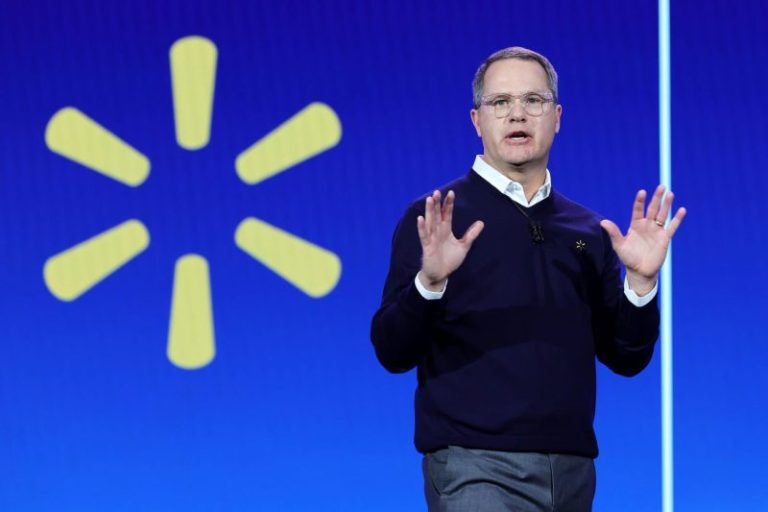
Walmart announced Friday that longtime CEO Doug McMillon will retire at the end of January — which came as a surprise to some given the company’s success in a rapidly evolving retail landscape.

John Furner, Walmart’s U.S. CEO, will assume the role of overall CEO on Feb. 1, the company said. McMillon will continue to serve in an executive and advisory role through January 2027. Furner, 51, began his career at Walmart as an hourly associate.

McMillon, 59, has held the top job since 2014 and is only the fifth person to lead the storied company in its 63-year history.

McMillon has overseen a radical transformation of Walmart’s image in a little over a decade.

In 2014, Walmart had a reputation as a budget retail option and was accused of underpaying its associates. Today, it draws more well-to-do shoppers and has earned credit for adopting innovative personnel policies.

McMillon also built up Walmart’s e-commerce operation into the country’s second-largest, behind only Amazon. Over the course of McMillon’s tenure, the value of Walmart’s shares has increased some 300%.

“Serving as Walmart’s CEO has been a great honor and I’m thankful to our Board and the Walton family for the opportunity,” McMillon said in a statement. “I’ve worked with John for more than 20 years. … He’s uniquely capable of leading the company through this next AI-driven transformation.”

America’s retail landscape continues to rapidly evolve, as consumer spending habits increasingly bifurcate between wealthier households and everyone else.

However, Walmart’s quarterly results have held steady — and the company has been justly rewarded by investors. Just this year, Walmart shares have climbed around 13%. Over the course of McMillon’s tenure, the retailer’s stock price is up some 300%.

On Walmart’s most recent earnings call in August, McMillon indicated the company has been able to withstand the broader pressures facing consumers. Its shoppers’ “behavior has been generally consistent,” he said. “We aren’t seeing dramatic shifts.”

Other retailers have not been so fortunate.

Target’s shares have lost about one-third of their value this year, as the chain works to regain its footing in a more value-conscious environment. In August, longtime CEO Brian Cornell announced plans to step down.

Amazon, meanwhile, has fared slightly better as consumers continue to prioritize the convenience of online shopping. But it recently announced thousands of layoffs affecting corporate employees. Amazon’s share price has climbed about 8% this year.

McMillon has also steered Walmart through a volatile period in U.S. politics, during which elected officials have engaged directly with companies and consumers have proven willing to boycott corporate giants over social issues.

Walmart found itself in President Donald Trump’s crosshairs in May, after it signaled plans to increase some prices in response to his tariffs.

“Walmart should STOP trying to blame Tariffs as the reason for raising prices throughout the chain,” Trump wrote on his Truth Social platform. “Between Walmart and China they should, as is said, ‘EAT THE TARIFFS,’ and not charge valued customers ANYTHING. I’ll be watching, and so will your customers!!!”

While subsequent reports indicated that Walmart had indeed increased prices on some items, McMillon said in August that the changes were gradual enough that consumer habits shifted only modestly.

Six months after Trump singled Walmart out over tariffs, he did so again — but for a very different reason.

In recent weeks, the Trump White House has repeatedly touted Walmart’s 2025 Thanksgiving menu package — which costs less overall than the retailer’s similar menu did last year — as a sign that the president’s economic policies have helped drive down grocery prices for consumers.

But there is a flaw in that rationale. This year’s Walmart Thanksgiving menu contains fewer items than last year’s menu did.

This post appeared first on NBC NEWS

Skyharbour Resources Ltd. (TSX-V: SYH ) (OTCQX: SYHBF ) (Frankfurt: SC1P ) (‘Skyharbour’, ‘SYH’ or the ‘Company’) is pleased to announce that it has entered into a definitive repurchase agreement (the ‘Strategic Agreement’) with Denison Mines Corp. (‘Denison’ or ‘DML’) whereby Denison will acquire an initial project interest in Skyharbour’s Russell Lake Uranium Project (‘Russell’ or the ‘Project’) and the parties have agreed to enter into four separate joint venture agreements at closing on various claims making up Russell (the ‘Transaction’). The Project is strategically located in the central portion of the Eastern Athabasca Basin of northern Saskatchewan, with access to regional infrastructure, including an all-weather road and powerline.

Russell Lake Project Location Map:
http://www.skyharbourltd.com/_resources/images/2025-11-14%20SKY-RussellLake-Updated.jpg

Highlights:

  • Strategic Agreement represents combined total project consideration of up to CAD $61.5 million consisting of cash or share payments to Skyharbour totalling up to $21.5 million (including $18.0 million before year end) plus expenditures totalling up to $40.0 million for Denison to acquire between a 20% and 70% ownership interest over seven years in the claims making up Russell, with Skyharbour owning the remaining interests.
  • Denison (TSX: DML; NYSE American: DNN), a leading uranium mining company with a market capitalization of over $3 billion, is developing the Wheeler River Project (‘Wheeler River’), which shares a 55 kilometre border with Russell. Denison is an existing, large corporate shareholder of Skyharbour and now joins the Company as a strategic, active, funding partner at Russell.
  • The Project will be divided into four different joint ventures, including Russell Lake (‘RL’), Getty East, Wheeler North, and the Wheeler River Inlier Claims, of which Skyharbour will retain initial ownership interests of 80%, 70%, 51%, and 30%, respectively. Denison can then earn up to a 70% interest in the Wheeler North and Getty East properties through option agreements.
  • The technical teams of Denison and Skyharbour will work cooperatively to advance and unlock value across the joint ventures, employing top-tier exploration and development expertise in the region.
  • Denison has committed to a minimum of $4 million in exploration expenditures over the first two years at Wheeler North and Getty East combined, as well as agreeing to fund to maintain its pro-rata 20% participation interest in the RL claims through 2029 up until such time that total exploration expenditures on the property reach $10 million.
  • Skyharbour to remain operator with an 80% ownership interest at the RL claims comprising over 53,192 hectares of the original 73,314 hectare Russell Lake Project. The Company will also act as operator during the first earn-in at Getty East with Denison sole funding the exploration in order to fulfill the earn-in option criteria.
  • Skyharbour to benefit with a substantial financial commitment from Denison before year end to help fund its uranium exploration and corporate activities through 2026. The Company will also generate revenue from its operator fee at the McGowan Lake exploration camp at the Project.
  • Skyharbour will continue to directly advance its high-grade Moore Uranium project as well as the RL claims at Russell, while partner companies fund exploration at some of the Company’s other projects.

Jordan Trimble, President and CEO of Skyharbour, stated: ‘This is a transformative transaction for Skyharbour and our shareholders as it represents a major stamp of approval for Russell with up to $61.5 million in combined project consideration coming in. We are very pleased to expand upon our long-standing relationship with Denison and to partner with their team to advance one of the more prospective exploration projects in the Athabasca Basin proximal to existing and developing mines. Denison’s success in exploring, permitting, and developing the neighboring world-class Wheeler River Project will provide considerable insight and experience as we jointly pursue success at Russell. Further, this transaction delivers on our belief that Russell should be treated as multiple different projects due to the abundance of targets and sheer scale of the land package in one of the most prolific uranium exploration corridors in the world. The structure and terms of the Strategic Agreement allow Skyharbour to continue exploring as operator at the majority of the claims at Russell, while participating in the future success that Denison seeks as operator at the Wheeler North and Wheeler River Inlier claims. Furthermore, we will receive a significant amount of cash and Denison shares to help fund our exploration efforts and corporate activities through 2026.’

David Cates, President and CEO of Denison, further commented: ‘As Denison nears receipt of final regulatory approvals for the Phoenix In-Situ Recovery mine proposed for our flagship Wheeler River property, we are also making measured investments in our project pipeline – including our next development assets and high-potential exploration properties. Given its proximity to Wheeler River, Denison has had an interest in adding Russell to our property portfolio for much of my nearly two decades with the Company. This transaction achieves that objective by providing Denison with the opportunity to lead and participate in exploration efforts across four newly created joint ventures, which are designed to drive collaboration between Denison and Skyharbour’s technical teams. We are excited to build on our long-standing relationship with Skyharbour and accelerate the evaluation of this exceptional package of highly prospective ground.’

Reorganization of the Russell Lake Project:
https://www.skyharbourltd.com/_resources/images/Russell-Map-New.jpg

Upon closing of the Strategic Agreement, Denison will earn an initial project interest in each of the four new Russell exploration projects including a 49% interest in the Wheeler North claims, a 20% interest in the RL claims, a 30% interest in the Getty East claims, and a 70% interest in the Wheeler River Inlier claims.

  1. Wheeler North (51% SYH, 49% DML ; subject to additional earn-in options ) : The yellow claims in the map above represent 16,409 hectares over eight claims. The claims host some of the exploration targets located proximal to Wheeler River, including the Grayling and Fork Zones. Upon closing of the Transaction, Denison will have the option to increase its interest in Wheeler North to a 70% interest in these claims and Denison will become the operator of Wheeler North as described in more detail below.
  2. Russell Lake or RL (80% SYH, 20% DML) : The pink claims in the map above represent 53,192 hectares over 16 claims. These claims are located north and west of Skyharbour’s Moore Project and host numerous exploration target areas including Christie Lake, NE Russell, Blue Steel, Taylor Bay, South Russell, and Kowalchuk Lake. In order to maintain its initial interest in RL, Denison has agreed to fund its pro rata share of up to a maximum of C$10.0 million in total project expenditures. Upon the closing of the Transaction, Skyharbour will remain operator of RL.
  3. Wheeler River Inliers (30% SYH, 70% DML) . The blue claims in the map above represent 608 hectares over two claims. These are inlier claims within Denison’s Wheeler River project hosting the West Russell and C-Block exploration target areas. DML will become operator of the Wheeler River Inliers.
  4. Getty East (70% SYH, 30% DML ; subject to additional earn-in options ) . The green claim in the map above representing 3,105 hectares is host to the Little Man Lake exploration prospect. The claim borders Cameco’s Cree Zimmer property which holds its Key Lake operations to the south.  Upon the closing of the Transaction, Skyharbour will remain operator of Getty East; however, Denison will have the option to become the operator and acquire up to a 70% interest in this joint venture as described in more detail below.

Transaction Details:

The consideration payment will consist of a $2 million cash payment immediately upon execution of the Strategic Agreement (the ‘Upfront Payment’), and deferred consideration of $16 million (the ‘Deferred Consideration’) payable on or before December 31 st , 2025.

The Deferred Consideration shall be payable in two tranches, each of which may be paid in cash or shares of Denison at Denison’s election, including $8 million on or before the fifth business day prior to December 21 st , 2025, and another $8 million within 10 days of December 21 st , 2025. Closing of the transaction (‘Closing’) is expected to occur on or before December 21 st , 2025.

The current exploration camp at McGowan Lake on the Project will continue to be operated by Skyharbour and an administrative fee will be payable by Denison to Skyharbour. The claims comprising Russell are subject to various existing underlying royalties to other parties.

The Transaction is subject to customary approvals, including Skyharbour obtaining TSX Venture Exchange approval. The Transaction will be considered a Reviewable Transaction under TSX Venture Exchange policies as David Cates is a director of both Denison and Skyharbour.

Denison Earn-In Options:

The Earn-In Option Agreements grant Denison an option to earn additional interests in Wheeler North and Getty East.

Wheeler North Earn-In Option :

Under the terms of the Wheeler North Earn-In Option Agreement, Denison may acquire up to a 70% interest in Wheeler North. The option agreement contains two (2) phases, as summarized below:

Phase 1: To earn an additional 11% interest in Wheeler North (increasing Denison’s ownership to 60%), Denison must:

  • Incur $10.0 million in exploration expenditures at Wheeler North within 48 months of Closing, of which $2.5 million in exploration expenditures must be completed within 24 months of Closing, and
  • Make a cash payment in the amount of $1.5 million to Skyharbour within 48 months of Closing.

Phase 2: To earn an additional 10% interest (increasing Denison’s ownership to 70%) in Wheeler North, Denison must complete the requirements of Phase 1, plus the following:

  • Incur an additional $15.0 million in exploration expenditures at Wheeler North within 7 years of Closing, and
  • Make a further cash payment in the amount of $2.0 million to Skyharbour within 7 years of Closing.

Getty East Earn-In Option Agreement:

Under the terms of the Getty East Option Agreement, Denison may acquire up to a 70% interest in Getty East. The option agreement contains two (2) phases, as summarized below:

Phase 1: To earn an additional 19% interest in Getty East (increasing Denison’s ownership to 49%), Denison must incur $5.0 million in exploration expenditures at Getty East within 48 months of Closing, of which $1.5 million must be completed within the first 24 months of Closing.

Phase 2: To earn an additional 21% interest in Getty East (increasing Denison’s ownership to 70%), Denison must complete the requirements of Phase 1, plus incur an additional $10 million in exploration expenditures within 7 years of Closing. Upon completion of the Phase 2 earn-in option criteria, Denison will have the option to become the operator in this joint venture.

Russell Lake Uranium Project Overview:

The Russell Lake Project is a large, advanced-stage uranium exploration property totalling 73,314 hectares strategically located between Cameco’s Key Lake and McArthur River Projects, and adjoining Denison’s Wheeler River Project to the west and Skyharbour’s Moore Uranium Project to the east. The northern extension of Highway 914 between Key Lake and McArthur River runs through the western extent of the property and greatly enhances accessibility, while a high-voltage powerline is situated alongside this road.

Skyharbour’s New 80% Owned RL Project:

The claims making up the RL Project constitute over seventy percent of the original Russell project area and will continue to be explored by Skyharbour as the operator and 80% owner. Denison will acquire a 20% interest and has agreed to fund to maintain its pro-rata participation interest in the RL claims through December 31 st , 2029, or until such time that total expenditures on the properties have reached $10 million.

The RL claims have numerous highly prospective targets that Skyharbour will continue to advance. The Christie Lake target area contains basement-hosted uranium mineralization with historical drilling returning 0.17% U 3 O 8 over 0.4 metres at 436.4 metres depth in hole CL-10-03, hosted within a strongly hematized breccia. A prospective clay altered basement fault system runs throughout this area.

The Blue Steel target area comprises graphitic metasediments that were last drilled in 2008. The full extent of the graphitic corridor remains unknown and completely untested. Historical geophysics indicate potential faulting along this corridor, highlighting it as a priority area for follow-up work using modern geophysical methods to refine drill targets.

The Kowalchuk area, situated within the southern Russell claims, is another prospective area on the RL claims, with multiple inferred structural trends passing through it. This area has seen only limited modern geophysical coverage to date.

In addition to the aforementioned target areas, there are many kilometres of untested EM conductors on the RL claims underlain by rocks of low magnetic intensity, suggestive of the presence of prospective graphitic meta-pelitic basement lithologies typical of Athabasca-style uranium systems. With limited modern exploration conducted over the past 12 years, the RL claims remain underexplored and highly prospective for both expanding known mineralized zones and making new discoveries.

Advisors and Counsel:

Haywood Securities Inc. is acting as financial advisor to Skyharbour in connection with the Transaction, and AFG Law LLP and DuMoulin Black LLP are acting as legal counsel to Skyharbour.

Qualified Person:

The technical information in this news release has been prepared in accordance with the Canadian regulatory requirements set out in National Instrument 43-101 and reviewed and approved by Serdar Donmez, P.Geo., VP of Exploration for Skyharbour as well as a Qualified Person.

About Skyharbour Resources Ltd.:

Skyharbour holds an extensive portfolio of uranium exploration projects in Canada’s Athabasca Basin and is well positioned to benefit from improving uranium market fundamentals with interest in thirty-seven projects covering over 616,000 hectares (over 1.5 million acres) of land. Skyharbour has acquired from Denison Mines, a large strategic shareholder of the Company, a 100% interest in the Moore Uranium Project, which is located 15 kilometres east of Denison’s Wheeler River project and 39 kilometres south of Cameco’s McArthur River uranium mine. Moore is an advanced-stage uranium exploration property with high-grade uranium mineralization in several zones at the Maverick Corridor. Adjacent to the Moore Project is the Russell Lake Uranium Project, which hosts widespread uranium mineralization in drill intercepts over a large property area with exploration upside potential. The Company is actively advancing these projects through exploration and drilling programs.

Skyharbour also has joint ventures with industry leaders Denison Mines, Orano Canada Inc., Azincourt Energy, and Thunderbird Resources at the Russell, Preston, East Preston, and Hook Lake Projects, respectively. The Company also has several active earn-in option partners, including CSE-listed Basin Uranium Corp. at the Mann Lake Uranium Project; TSX-V listed North Shore Uranium at the Falcon Project; UraEx Resources at the South Dufferin and Bolt Projects; Hatchet Uranium at the Highway Project; CSE-listed Mustang Energy at the 914W Project; and TSX-V listed Terra Clean Energy at the South Falcon East Project.

In aggregate, Skyharbour has now signed earn-in option agreements with partners that total to potentially over $76 million in partner-funded exploration expenditures and over $42 million in cash and share payments coming into Skyharbour, assuming that these partner companies complete their entire earn-ins at the respective projects.

Skyharbour’s goal is to maximize shareholder value through new mineral discoveries, committed long-term partnerships, and the advancement of exploration projects in geopolitically favourable jurisdictions.

Skyharbour’s Uranium Project Map in the Athabasca Basin:
http://www.skyharbourltd.com/_resources/images/SKY-SaskProject-Locator-2025-11-14-Updated.jpg

To find out more about Skyharbour Resources Ltd. (TSX-V: SYH) visit the Company’s website at www.skyharbourltd.com .

Skyharbour Resources Ltd.

‘Jordan Trimble’

Jordan Trimble
President and CEO

For further information contact myself or:
Nicholas Coltura
Investor Relations Manager
Skyharbour Resources Ltd.
Telephone: 604-558-5847
Toll Free: 800-567-8181
Facsimile: 604-687-3119
Email: info@skyharbourltd.com

NEITHER THE TSX VENTURE EXCHANGE NOR ITS REGULATION SERVICES PROVIDER ACCEPTS RESPONSIBILITY FOR THE ADEQUACY OR ACCURACY OF THE CONTENT OF THIS NEWS RELEASE.

This release includes certain statements that may be deemed to be ‘forward-looking statements’. All statements in this release, other than statements of historical facts, that address events or developments that management of the Company expects, are forward-looking statements, including receipt of TSXV approval to the Transaction and the closing of the Transaction. Although management believes the expectations expressed in such forward-looking statements are based on reasonable assumptions, such statements are not guarantees of future performance, and actual results or developments may differ materially from those in the forward-looking statements. The Company undertakes no obligation to update these forward-looking statements if management’s beliefs, estimates or opinions, or other factors, should change. Factors that could cause actual results to differ materially from those in forward-looking statements, exploration and development successes, regulatory approvals including TSXV approval, and general economic, market or business conditions. Please see the public filings of the Company at www.sedarplus.ca for further information.


 

News Provided by GlobeNewswire via QuoteMedia

This post appeared first on investingnews.com

On Thursday (November 13), Canadian Prime Minister Mark Carney announced a second round of nation-building projects that will be referred to the Major Projects Office. The office was established earlier in the year to streamline the regulatory and funding processes for projects deemed to be in the national interest.

The first set of projects, announced on September 11, included support for the expansion of Newmont’s (NYSE:NEM,ASX:NEM) Red Chris mine in Northern British Columbia, LNG Canada’s phase 2 expansion of its facility in Kitimat, BC, and Foran Mining’s (TSX:FOM) McIlvenna Bay copper-zinc project in Saskatchewan.

According to the Prime Minister’s Office (PMO), the new set of projects represents more than C$56 billion in new investment and supports the creation of 68,000 new jobs.

Critical mineral projects on the list consist of:

        Outside of critical minerals projects, the announcement included support for the Ksi Lisims liquefied natural gas (LNG) project near Prince Rupert in Northwest BC. The Nisga’a First Nation is leading the project and, when complete, it will become Canada’s second-largest LNG facility after LNG Canada’s Kitimat facility. According to the PMO, the project is expected to generate almost C$30 billion in investment and create thousands of jobs.

        Additionally, support will be made available for the North Coast Transmission line, which will provide low-cost electricity and improved telecommunications to communities along BC’s north coast. Likewise, the Iqaluit Nukkiksautiit hydro energy project will receive support to provide hydroelectric energy to communities in Nunavut and reduce the reliance on diesel imports.

        For more on what’s moving markets this week, check out our top market news round-up.

        Markets and commodities react

        Canadian equity markets were mixed this week.

        The S&P/TSX Composite Index (INDEXTSI:OSPTX) rose 1.89 percent over the week to close Friday (November 14) at 30,326.46.

        Meanwhile, the S&P/TSX Venture Composite Index (INDEXTSI:JX) rebounded to gain 1.33 percent to 879.88. The CSE Composite Index (CSE:CSECOMP) had another bad week, plunging 9.01 percent to close at 150.19.

        The gold price rose significantly this week, climbing from its open of US$4,000 to US$4,243 by Thursday morning. However, it pulled back to end the week up 2.01 percent at US$4,080.64 per ounce by 4:00 p.m. EST Friday.

        The silver price performed even better. After opening at US$48.35, it tested all-time highs at US$54.31 Thursday before ultimately ending the week up 4.57 at US$50.56.

        Meanwhile, in base metals, the copper price gained 1.79 percent to US$5.11 per pound.

        The S&P Goldman Sachs Commodities Index (INDEXSP:SPGSCI) rose 1.28 percent to end Friday at 559.27.

        Top Canadian mining stocks this week

        How did mining stocks perform against this backdrop?

        Take a look at this week’s five best-performing Canadian mining stocks below.

        Stocks data for this article was retrieved at 4:00 p.m. EST on Friday using TradingView’s stock screener. Only companies trading on the TSX, TSXV and CSE with market caps greater than C$10 million are included. Mineral companies within the non-energy minerals, energy minerals, process industry and producer manufacturing sectors were considered.

        1. Adex Mining (TSXV:ADE)

        Weekly gain: 157.14 percent
        Market cap: C$40.63 million
        Share price: C$0.09

        Adex Mining is an exploration company that holds a 100 percent stake in the Mount Pleasant project in Southwest New Brunswick, Canada.

        The property contains two main deposits: the Fire Tower zone, which hosts tungsten and molybdenum mineralization, and the North zone, which hosts tin, zinc and indium.

        The asset consists of 102 mineral claims covering 1,600 hectares, as well as equipment and facilities from historic mining operations conducted by BHP (ASX:BHP,NYSE:BHP,LSE:BHP) between 1983 and 1985.

        According to its most recent investor presentation released on June 11, the property hosts the world’s largest indium reserve and North America’s largest tin deposit. Indicated resources for the North zone demonstrated contained metal values of 47 million kilograms of tin, and 789,000 kilograms of indium from 12.4 million metric tons with average grades of 0.38 percent tin and 64 parts per million indium.

        Additionally, the company engaged Moneta Securities in June to oversee selling the mine following a strategic review.

        Adex has not released news in the past week. However, its Fire Tower zone bears similarities to Northcliff’s Sisson tungsten-molybdenum project in New Brunswick, which the Canadian government referred to the Major Projects Office on Thursday.

        2. Trident Resources (TSXV:ROCK)

        Weekly gain: 118.82 percent
        Market cap: C$42.58 million
        Share price: C$1.86

        Trident Resources, formerly Eros Resources, is a gold and copper exploration company focused on projects in Saskatchewan, Canada.

        A three-way merger in early 2025 between Eros Resources, MAS Gold and Rockridge Resources allowed the companies to consolidate a portfolio of assets in Saskatchewan, including the Contact Lake and Greywacke gold projects in the La Ronge gold belt as well as the Knife Lake copper project.

        Its primary focus has been on its flagship Contact Lake gold project, a 21,440 hectare property located near La Ronge, Saskatchewan. The project hosts four primary deposits: Contact Lake, Preview SW, Preview North and North Lake.

        On Wednesday (November 12), the company released assay results from diamond drilling at Contact Lake, the first exploration conducted on the property in nearly 30 years. Highlights from the initial three holes included one hole with 7.03 grams per metric ton (g/t) gold over 43.25 meters, including an intersection of 30.06 g/t gold over 9.25 meters.

        The company noted that, while it was still in the early stages of exploration at the property, it was encouraged by results that bore similarities to early results of other significant high-grade discoveries in the region.

        3. Northcliff Resources (TSX:NCF)

        Weekly gain: 116.22 percent
        Market cap: C$279.18 million
        Share price: C$0.4

        Northcliff Resources is a development and exploration company advancing its Sisson tungsten-molybdenum project in New Brunswick, Canada.

        The 14,140 hectare property has seen extensive exploration dating back to the early 1980s.

        A 2013 mineral reserve estimate demonstrated total proven and probable quantities of 22.2 million metric tons of tungsten oxide and 154.8 million pounds of molybdenum from 334.36 million metric tons of ore with average grades of 0.07 percent tungsten oxide and 0.02 percent molybdenum.

        The project is currently in the development stage, and on Friday, it announced it was granted a five-year extension to the construction commencement timeline by New Brunswick’s Department of Environment and Climate Change. Construction is now anticipated to begin in December 2025.

        The project was also one of six that were included in the second-tranche of Canadian nation-building projects referred to the Major Projects Office on Thursday. The inclusion on the list will give Northcliff access to a streamlined regulatory process and open funding assistance to facilitate the development of Sisson.

        Commenting on the news, Northcliff Chairman, President and CEO Andrew Ing indicated the company is excited with its inclusion and that its goal is to contribute to building a resilient critical mineral supply chain.

        The release also outlined significant financial funding received since the start of the year, including US$15 million from the US Department of Defense and C$8.21 million from Natural Resources Canada.

        4. Canada Nickel (TSXV:CNC)

        Weekly gain: 61.54 percent
        Market cap: C$334.66 million
        Share price: C$1.68

        Canada Nickel is an exploration and development company advancing its flagship Crawford nickel sulphide project in Ontario, Canada.

        The property consists of 116 crown patents and 150 single- and multi-cell mining claims covering an area of approximately 9,600 hectares near Timmins and has seen exploration dating back to the 1960s.

        A feasibility study released in October 2023 demonstrated the project’s economics, with a post-tax net present value of US$2.48 billion and an internal rate of return of 17.1 percent.

        The included ore reserve estimate reported proven and probable reserves of contained metal values of 3.7 million metric tons of nickel, 9.7 million metric tons of chromium, 215,000 metric tons of copper, 777,000 ounces of palladium, and 519,000 ounces of platinum.

        The metal is contained in 1.72 billion metric tons of ore with average grades of 0.22 percent nickel, 0.57 percent chromium, 0.013 percent copper, 0.014 g/t palladium and 0.01 g/t platinum.

        Shares in Canada Nickel rose sharply this week after Crawford was included in the second round of projects referred to the Canadian government’s Major Project Office.

        In its release following the announcement, Canada Nickel’s CEO said that the company looks forward to working with the government and the MPO to secure financing and permits to begin construction at Crawford by the end of 2026.

        He also stated that the project represents a secure, domestic supply of critical minerals, including nickel and North America’s only source of chromium.

        5. Gold Terra Resources (TSXV:YGT)

        Weekly gain: 57.89 percent
        Market cap: C$51.71 million
        Share price: C$0.15

        Gold Terra is an exploration company advancing the Con Mine gold property in the Northwest Territories, Canada.

        The project was initially acquired as part of a 2021 agreement with Newmont that gave Gold Terra the option to earn a 100 percent interest in the asset for meeting certain exploration milestones and regulatory approvals, along with a C$8 million cash payment to Newmont.

        The agreement was then amended in September 2024, extending the timeline by 2 years to November 21, 2027.

        The property consists of 138 mining leases and 165 claims covering a total area of 79,046 hectares and hosts the historic Con Mine, which produced more than 6.1 million ounces of gold.

        A mineral resource estimate included in an October 2022 technical report demonstrated a total inferred resource of 1.21 million ounces of gold from 24.3 million metric tons with an average grade of 1.54 g/t gold.

        Shares in Gold Terra gained this week after the company announced a C$6.3 million non-brokered private placement that included a new strategic investment from Franco-Nevada (TSX:FNV,NYSE:FNV) Co-Founder David Harquail and existing shareholder Eric Sprott.

        The company said it will use proceeds for general corporate purposes and to fund a drilling program scheduled for January 2026 at the southern end of the Campbell Shear target at the Con Mine property. The program aims to expand the property’s indicated and inferred resources.

        FAQs for Canadian mining stocks

        What is the difference between the TSX and TSXV?

        The TSX, or Toronto Stock Exchange, is used by senior companies with larger market caps, and the TSXV, or TSX Venture Exchange, is used by smaller-cap companies. Companies listed on the TSXV can graduate to the senior exchange.

        How many mining companies are listed on the TSX and TSXV?

        As of May 2025, there were 1,565 companies listed on the TSXV, 910 of which were mining companies. Comparatively, the TSX was home to 1,899 companies, with 181 of those being mining companies.

        Together, the TSX and TSXV host around 40 percent of the world’s public mining companies.

        How much does it cost to list on the TSXV?

        There are a variety of different fees that companies must pay to list on the TSXV, and according to the exchange, they can vary based on the transaction’s nature and complexity. The listing fee alone will most likely cost between C$10,000 to C$70,000. Accounting and auditing fees could rack up between C$25,000 and C$100,000, while legal fees are expected to be over C$75,000 and an underwriters’ commission may hit up to 12 percent.

        The exchange lists a handful of other fees and expenses companies can expect, including but not limited to security commission and transfer agency fees, investor relations costs and director and officer liability insurance.

        These are all just for the initial listing, of course. There are ongoing expenses once companies are trading, such as sustaining fees and additional listing fees, plus the costs associated with filing regular reports.

        How do you trade on the TSXV?

        Investors can trade on the TSXV the way they would trade stocks on any exchange. This means they can use a stock broker or an individual investment account to buy and sell shares of TSXV-listed companies during the exchange’s trading hours.

        Article by Dean Belder; FAQs by Lauren Kelly.

        Securities Disclosure: I, Dean Belder, hold no direct investment interest in any company mentioned in this article.

        Securities Disclosure: I, Lauren Kelly, hold no direct investment interest in any company mentioned in this article.

        This post appeared first on investingnews.com

        More than 1,000 unionized Starbucks workers went on strike at 65 U.S. stores Thursday to protest a lack of progress in labor negotiations with the company.

        The strike was intended to disrupt Starbucks’ Red Cup Day, which is typically one of the company’s busiest days of the year. Since 2018, Starbucks has given out free, reusable cups on that day to customers who buy a holiday drink. Starbucks Workers United, the union organizing baristas, said Thursday morning that the strike had already closed some stores and was expected to force more to close later in the day.

        Starbucks Workers United said stores in 45 cities would be impacted, including New York, Philadelphia, Minneapolis, San Diego, St. Louis, Dallas, Columbus, Ohio, and Starbucks’ home city of Seattle. There is no date set for the strike to end, and more stores are prepared to join if Starbucks doesn’t reach a contract agreement with the union, organizers said.

        Starbucks emphasized that the vast majority of its U.S. stores would be open and operating as usual Thursday. The coffee giant has 10,000 company-owned stores in the U.S., as well as 7,000 licensed locations in places like grocery stores and airports.

        As of noon Thursday on the East Coast, Starbucks said it was on track to meet or exceed its sales expectations for the day at its company-owned stores.

        “The day is off to an incredible start,” the company said in a statement.

        Around 550 company-owned U.S. Starbucks stores are unionized. More have voted to unionize, but Starbucks closed 59 unionized stores in September as part of a larger reorganization campaign.

        Here’s what’s behind the strike.

        Striking workers say they’re protesting because Starbucks has yet to reach a contract agreement with the union. Starbucks workers first voted to unionize at a store in Buffalo in 2021. In December 2023, Starbucks vowed to finalize an agreement by the end of 2024. But in August of last year, the company ousted Laxman Narasimhan, the CEO who made that promise. The union said progress has stalled under Brian Niccol, the company’s current chairman and CEO. The two sides haven’t been at the bargaining table since April.

        Workers say they’re seeking better hours and improved staffing in stores, where they say long customer wait times are routine. They also want higher pay, pointing out that executives like Niccol are making millions and the company spent $81 million in June on a conference in Las Vegas for 14,000 store managers and regional leaders.

        Dochi Spoltore, a barista from Pittsburgh, said in a union conference call Thursday that it’s hard for workers to be assigned more than 19 hours per week, which leaves them short of the 20 hours they would need to be eligible for Starbucks’ benefits. Spoltore said she makes $16 per hour.

        “I want Starbucks to succeed. My livelihood depends on it,” Spoltore said. “We’re proud of our work, but we’re tired of being treated like we’re disposable.”

        The union also wants the company to resolve hundreds of unfair labor practice charges filed by workers, who say the company has fired baristas in retaliation for unionizing and has failed to bargain over changes in policy that workers must enforce, like its decision earlier this year to limit restroom use to paying customers.

        Starbucks says it offers the best wage and benefit package in retail, worth an average of $30 per hour. Among the company’s benefits are up to 18 weeks of paid family leave and 100% tuition coverage for a four-year college degree. In a letter to employees last week, Starbucks’ Chief Partner Officer Sara Kelly said the union walked away from the bargaining table in the spring.

        Kelly said some of the union’s proposals would significantly alter Starbucks’ operations, such as giving workers the ability to shut down mobile ordering if a store has more than five orders in the queue.

        Kelly said Starbucks remained ready to talk and “believes we can move quickly to a reasonable deal.” Kelly also said surveys showed that most employees like working for the company, and its barista turnover rates are half the industry average.

        Unionized workers have gone on strike at Starbucks before. In 2022 and 2023, workers walked off the job on Red Cup Day. Last year, a five-day strike ahead of Christmas closed 59 U.S. stores. Each time, Starbucks said the disruption to its operations was minimal. Starbucks Workers United said the new strike is open-ended and could spread to many more unionized locations.

        The number of non-union Starbucks locations dwarfs the number of unionized ones. But Todd Vachon, a union expert at the Rutgers School of Management and Labor Relations, said any strike could be highly visible and educate the public on baristas’ concerns.

        Unlike manufacturers, Vachon said, retail industries depend on the connection between their employees and their customers. That makes shaming a potentially powerful weapon in the union’s arsenal, he said.

        Starbucks’ same-store sales, or sales at locations open at least a year, rose 1% in the July-September period. It was the first time in nearly two years that the company had posted an increase. In his first year at the company, Niccol set new hospitality standards, redesigned stores to be cozier and more welcoming, and adjusted staffing levels to better handle peak hours.

        Starbucks also is trying to prioritize in-store orders over mobile ones. Last week, the company’s holiday drink rollout in the U.S. was so successful that it almost immediately sold out of its glass Bearista cup. Starbucks said demand for the cup exceeded its expectations, but it wouldn’t say if the Bearista will return before the holidays are ove

        This post appeared first on NBC NEWS

        As its record-setting year continues, gold is on its way to posting its strongest annual performance since 1979, up an impressive 58 percent year-to-date as of Wednesday (November 12).

        The yellow metal once again broke past US$4,200 per ounce this week, moving closer to its all-time high of US$4,379.13, reached on October 17. Silver is up 80 percent year-to-date and also on track for its best year ever.

        The silver spot price rose on Thursday (November 13) morning to just a few cents shy of its record price of US$54.47 per ounce. Silver futures hit a new record high of US$54.415 per ounce in early morning trading.

        Gold rallied this week even amid news that the longest US government shutdown in history was coming to an end — typically the sort of development that would lessen demand for safe-haven assets. Yet continued labor market weakness in the US is priming expectations of further Federal Reserve interest rate cuts in December.

        Ipek Ozkardeskaya, senior analyst at Swissquote Bank, explained that gold is gaining on investor sentiment.

        What does it mean to say that gold is acting like a meme stock? Basically, it implies that the gold market is displaying unusual trading dynamics with investment demand at times seemingly more momentum-driven than data-driven.

        Gold and silver’s surge may be reflective of the good precious metals vibes investors are now feeling. Social media is buzzing with posts like “GOLD to $5,000!” and trending hashtags like #GoldRush2025 and #SilverSqueeze2.

        Gold exchange-traded funds in particular are very popular with retail investors. Sherwood News reported on Tuesday (November 11) that daily call volumes for the SPDR Gold Trust (ARCA:GLD), which is backed by physical gold, had outstripped 1 million by 1:10 p.m. EST, ‘roughly triple their 334,000 average over the last 10 full sessions.’

        While the speed and size of the price gains in gold and silver point to a highly sentiment-driven acceleration, this momentum doesn’t discount the strong fundamentals for gold and silver.

        Yes, we’re likely to see price pullbacks, but the overall upward momentum is still supported by macro forces such as economic uncertainty, Fed independence concerns, geopolitical risks and in the case of silver, supply worries.

        Securities Disclosure: I, Melissa Pistilli, hold no direct investment interest in any company mentioned in this article.

        This post appeared first on investingnews.com

        Investor Insight

        With strategic, US-based assets, Trigg Minerals is well-positioned to become a cornerstone supplier of antimony and tungsten into the United States and allied markets. With a sharpened focus on critical minerals in Tier-1 jurisdictions, Trigg is executing a strategy that aligns with urgent national security and energy transition needs.

        Overview

        Trigg Minerals (ASX:TMG,OTCQB:TMGLF) is an emerging leader in the global critical minerals space, focused exclusively on the development of antimony and tungsten assets in the US – both metals designated as critical minerals by the United States, Canada, Australia and the European Union for its role in national defense, energy transition technologies, and advanced industrial applications.

        Global supply of both antimony and tungsten is highly concentrated, with more than 80 percent controlled by China and Russia. Export restrictions, sanctions and the depletion of strategic stockpiles have created acute shortages, driving demand for alternative, conflict-free sources. This geopolitical backdrop creates a once-in-a-generation opportunity for new suppliers to anchor Western supply chains.

        Trigg’s strategy is firmly focused on developing critical minerals projects in Tier-1 US jurisdictions, where stable regulatory frameworks, established infrastructure and strong government support provide a competitive advantage.

        The company’s flagship Antimony Canyon project in Utah is one of the largest undeveloped antimony systems in the country, now secured through patented mining claims that streamline the pathway to production. Complementing this is the Tennessee Mountain tungsten project in Nevada, a historic tungsten district with confirmed high-grade mineralisation, and the newly acquired Central Idaho antimony project, which offers district-scale potential in a historically productive region.

        By advancing this portfolio, Trigg aims to establish itself as a vertically integrated supplier, from mine development through to downstream smelting and refined metal production. With strong shareholder support, active engagement with US government and defence stakeholders, and membership in international industry associations, Trigg Minerals is positioned to play a leading role in rebuilding secure Western supply of antimony and tungsten.

        Company Highlights

        • ASX-listed explorer advancing critical mineral projects in the United States, with a focus on antimony and tungsten.
        • Antimony Canyon Project (Utah) – flagship project with patented claims, high grades and a streamlined pathway to development.
        • Tennessee Mountain Project (Nevada) – historic tungsten district with confirmed high-grade mineralisation.
        • Central Idaho Antimony Project – district-scale landholding with grades up to 17.6 percent antimony.
        • Optionality in Australia, including Wild Cattle Creek, one of the world’s highest-grade undeveloped antimony resources.
        • Strong financial position and strategic investment support, including backing from Tribeca Investment Partners.
        • Proposal to rebrand as American Antimony and Tungsten at the November 2025 AGM to reflect US focus.

        Key Project

        Antimony Canyon Project

        Antimony Canyon, located in Utah, is Trigg’s flagship project and one of the largest undeveloped antimony systems in the United States. Historically mined during the 20th century but never subject to modern exploration, the district hosts multiple high-grade stibnite deposits. In 2025, Trigg consolidated control through the acquisition of 20 patented claims, giving the company full ownership of both surface and mineral rights. This control materially de-risks permitting by allowing the project to proceed under Utah’s streamlined Mined Land Reclamation Act, avoiding lengthy federal processes.

        An exploration target of 6.1 to 6.9 million tonnes (Mt) at 1.4 to 2.3 per cent antimony, containing between 86,000 and 158,000 tonnes of antimony metal, has been established on these claims. Sampling programs have confirmed exceptional grades, including channel results up to 33.2 percent antimony. With no active US antimony production, Antimony Canyon offers a unique opportunity to establish domestic supply, with Trigg advancing studies for a pilot-scale mining operation and downstream smelting in partnership with Metso, leveraging Ausmelt technology for the production of refined antimony metal.

        Tennessee Mountain Tungsten Project

        In August 2025, Trigg expanded into tungsten through the acquisition of the Tennessee Mountain project in Nevada, another Tier-1 US jurisdiction. This historic mining district hosts the Garnet Mine and widespread skarn-hosted tungsten mineralisation. Historical trenching and drilling reported thick intersections of mineralised zones, including 24.9 metres at 0.65 percent tungsten trioxide and 10.67 metres at 0.98 percent tungsten trioxide. A non-JORC historical estimate of 0.71 Mt, grading 0.3 to 0.5 percent tungsten trioxide, underscores the scale and potential of the system. With tungsten also recognised as a critical mineral for defence and clean energy technologies, Tennessee Mountain provides diversification and growth within Trigg’s US portfolio.

        Central Idaho Antimony Project

        In September 2025, Trigg acquired the Central Idaho antimony project, located within the historically productive Swanholm Mining District. Early fieldwork has already confirmed very high-grade mineralisation, including assays up to 17.6 percent antimony from surface samples, with associated gold values. The project covers a district-scale landholding in an area geologically analogous to Perpetua Resources’ Stibnite gold project, which has received substantial US federal support. With minimal historic disturbance and no legacy tailings, the project offers a clean environmental baseline and a potentially straightforward permitting pathway.

        Australian Projects

        While Trigg’s near-term focus is firmly in the US, the company maintains optionality through its Australian portfolio. The Wild Cattle Creek deposit in New South Wales contains a JORC 2012 resource of 1.52 Mt at 1.97 percent antimony, representing ~30,000 tonnes of contained metal and ranking as one of the world’s highest-grade undeveloped antimony deposits. Additional Australian projects, including Taylors Arm, Spartan and Nundle, as well as the Drummond gold project in Queensland, provide longer-term exploration upside.

        Management Team

        Timothy Morrison – Executive Chairman

        Tim Morrison is a highly experienced executive in the Australian resource and capital markets sector. With a background in law and investment banking, Morrison has held senior roles in both private and public resource companies, including those focused on critical minerals, base metals, and energy. His leadership at Trigg is defined by a clear strategic focus: unlock value from the Wild Cattle Creek deposit and position the company as a cornerstone in the global antimony supply chain. Morrison brings extensive experience in stakeholder engagement, project financing, and government relations, having previously led funding rounds, IPOs, and major project negotiations across multiple jurisdictions. His vision for Trigg is underpinned by a disciplined growth strategy and sovereign supply positioning.

        Jonathan King – Chief Geologist

        Jonathan King is a seasoned geologist with over 20 years of experience in mineral exploration and resource development. He has worked across a broad range of commodities including antimony, gold, copper, and rare earths, and has been instrumental in leading exploration teams across Australia, Southeast Asia and Africa. At Trigg, King is responsible for designing and executing the company’s exploration programs, including the upcoming high-impact drill campaign at Wild Cattle Creek. His technical leadership ensures that resource expansion is driven by rigorous geoscientific methodology, with a focus on unlocking district-scale potential across the broader Achilles project area.

        Andre Booyzen – Non-executive Director

        Andre Booyzen is an experienced mine operator and leader and has 25+ years of experience in operational, senior and executive roles, and is a specialist in antimony mining. He brings extensive experience in mine development, operational strategy, and off-take agreements. Booyzen previously served vice-president of Mandalay Resources (TSX:MND,OTCQB:MNDJF), where he had full strategic and operational control including product sales, off takes and funding negotiations at the Costerfield gold-antimony mine in Victoria, currently Australia’s only producer of antimony concentrate. Booyzen also served on the board of the Minerals Council of Australia (Victoria) for more than five years and was chairman for three of those.

        Chris Gregory – Non-executive Director

        Chris Gregory is a highly accomplished global mining executive and geologist with over 30 years of experience. He has an extensive leadership track record in discovery, development, mine operation and strategic growth across a wide range of commodities and jurisdictions. Gregory’s career included 22 years with Rio Tinto, where he led the discovery and evaluation of Sepon gold/copper deposit in Laos. He was vice-president, exploration and geology at Mandalay Resources, where he was instrumental in the success of the Costerfield Antimony/Gold mine in Victoria for more than 10 years up to 2022.

        Nicholas Katris – Non-executive Director and Company Secretary

        Nicholas Katris has over 15 years of experience in corporate advisory and public company management, having begun his career as a chartered accountant. He has been actively involved in the financial management of public companies within the mineral and resources sector, holding roles on both the board and executive management teams. His expertise spans the advancement and development of mineral resource assets, as well as business development. Throughout his career, Katris has worked across Australia, Africa, Brazil and Canada, gaining extensive experience in financial reporting, capital raising, and treasury management for resource companies. He currently serves as company secretary for Leeuwin Metals (ASX:LM1) and Perpetual Resources (ASX:PEC).

        James Graf – Non-executive Director

        James Graf has over 35 years of international capital markets, M&A and corporate management experience, including roles as CEO, CFO and/or board director of eight US-listed special purpose acquisition companies, and as a managing director at Deutsche Bank in Hong Kong and Merrill Lynch in Singapore. Graf currently serves as CEO and board director of Graf Global (NYSE:GRAF) and as interim CFO of NKGen Biotech (OTC:NKGN). He was previously a board director of Velodyne Lidar (Nasdaq:VLDR) and also founded an enterprise software company with operations in the US, Malaysia and Ukraine.

        This post appeared first on investingnews.com